In a nutshell
- 🔬 Moisture control is flavour control: Rice shapes water activity, sharpening aromas, preserving crunch, and enabling Maillard reactions for louder, cleaner tastes.
- 🌾 Rice as a “silent seasoning”: Its absorb–release dynamics and amylose/amylopectin balance tame acidity, carry umami, and meter flavours across each bite.
- 📊 Choose the right grain: Basmati for drier, aromatic lift; Jasmine for gentle perfume; Arborio/Carnaroli to thicken and enrich; Glutinous to cling sauces and add chew.
- 🧑🍳 Practical wins: Use rice to wick humidity for crisp pastry and fish skin, thicken stews, stabilize salsas, and make toasted rice powder for nutty depth without extra fat.
- ⚠️ Smart handling: Keep seasonings free-flowing with grains in shakers, and store cooked rice safely (cool quickly, refrigerate) to avoid Bacillus cereus while maximising flavour.
Rice does more than pad out a plate. It quietly engineers flavour by shaping how moisture moves, clings, evaporates, and concentrates within a dish. In British kitchens, where a roast one day meets a curry the next, that control matters. Water carries salt, dampens crunch, and changes how aromas bloom. Rice, raw or cooked, can nudge that balance. It can wick steam from pastry, trap fat in a stew, or keep spice mixes bright. The fastest way to intensify taste is often to master moisture, not add another pinch of seasoning. And rice is the tidy tool that makes it effortless.
Why Moisture Dictates Flavour
Flavour is a choreography of texture, aroma, and temperature — and water activity leads the dance. Wet surfaces soften crusts and mute volatility, the lift that sends aromas towards your nose. Dry ones invite Maillard reactions, building roasted notes and crisp edges that taste louder than their ingredients. Rice influences this balance with remarkable subtlety. In a stew, its starch granules swell and hold water; in a pie shell, raw grains soak up steam while keeping the pastry taut. Control moisture and you control how loudly every ingredient speaks.
Consider salt. In watery sauces it diffuses quickly, often tasting brash. Reduce free moisture and salt seems rounder, because oils and proteins carry it differently across the palate. Rice helps there too. Its hygroscopic nature lets it draw ambient damp from spice blends and rubs, keeping them free-flowing and aromatic. On the flip side, gently hydrated cooked rice releases vapour at the table, turbocharging curry aromas as you lift the lid. Small shifts in moisture reframe an entire flavour profile — brighter acidity, deeper savouriness, more resilient crunch.
Rice as a Silent Seasoning: Absorption, Release, and Balance
Think of rice as an edible sponge with composure. The ratio of amylose to amylopectin determines how each grain handles water. High-amylose long-grain varieties cook drier, stay separate, and soak up pan juices without turning claggy. Short-grain types behave like tiny water balloons, ideal when you want creaminess and slow flavour release. In either case, rice is not just filler. It is a moisture manager. It absorbs broth, oils, and fragrant compounds, then meters them back as you eat. That steady release is why a spoon of rice can make a sharp stew taste harmonised, not harried.
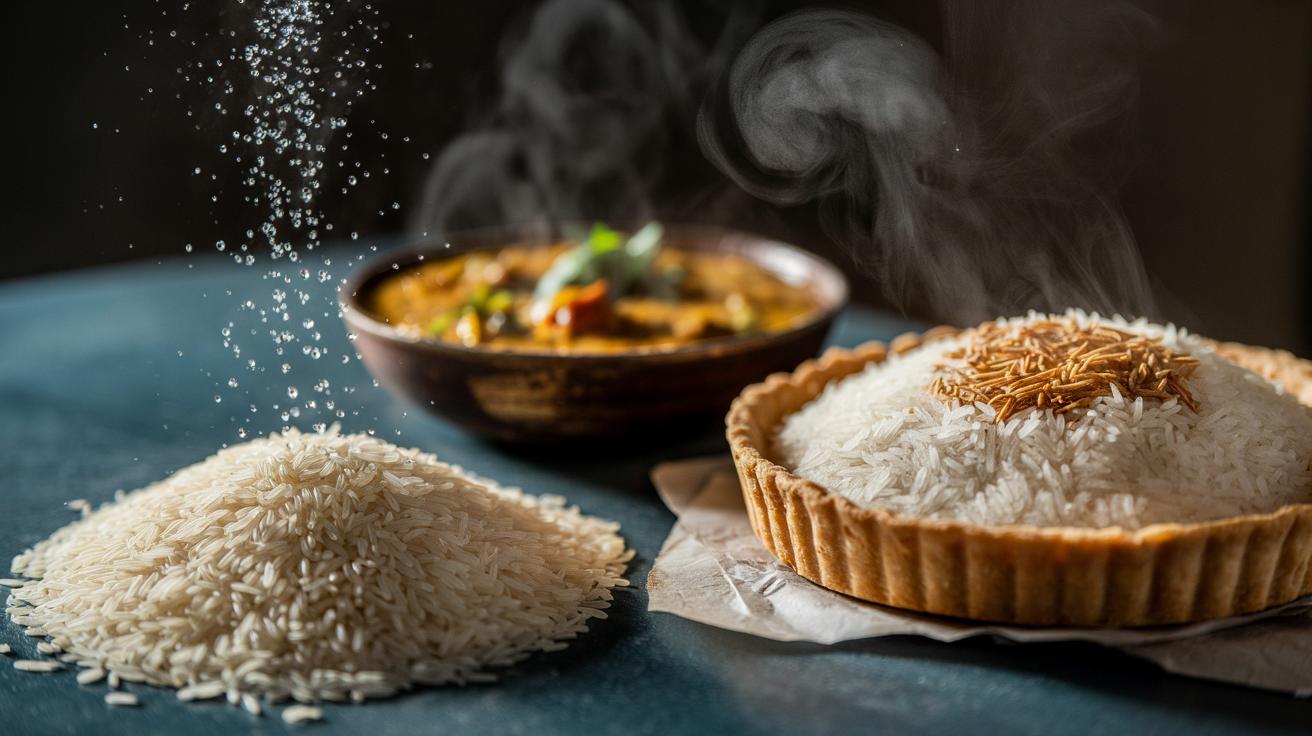
This dynamic shows up everywhere. Scatter raw rice into a blind-baked tart case and it sips away steam, preserving flake and snap — no soggy bottoms. Fold warm rice into a tomato-heavy curry and it tempers watery acidity while intensifying umami. Even outside the pot, a few grains in a salt cellar prevent caking, so seasoning lands where you want it, not in damp clumps. For punchier aromatics, toast rice until nutty, grind it to a powder, and stir into salads or larb-style dressings: it drinks surface moisture and unlocks roasted depth without extra salt or fat.
Choosing the Right Grain for the Job
Not all rice behaves alike. Selecting the right grain style for your moisture goal can turn a good dish into a great one. The matrix below pairs common varieties with their water-handling habits and flavour effects, so you can engineer texture and intensity on purpose.
| Rice Type | Moisture Behaviour | Best Uses | Flavour Impact |
|---|---|---|---|
| Basmati (long-grain) | Drier; high amylose; stays separate | Pilafs, biryanis, soaking pan juices | Amplifies aromatics; keeps sauces bright, not muddy |
| Jasmine | Moderately moist; fragrant | Stir-fries, Thai curries | Releases perfume; softens sharp spices gently |
| Arborio/Carnaroli | High surface starch; creamy | Risotto, brothy stews | Thickens and carries fats for deeper savouriness |
| Glutinous (sticky) | Very moist; cohesive | Dumplings, desserts, toasted rice powder | Clings sauces; adds chew and toasted notes when roasted |
Match the grain to the moisture challenge you face, not just the cuisine you fancy. For a Sunday roast, basmati underneath the rack drinks drips and yields a savoury, toasty side. For mushroom stews, Arborio thickens without cream, magnifying earthiness. Jasmine’s gentle moisture release flatters citrusy, chilli-bright sauces, letting heat and fragrance linger rather than flash and fade. Choosing well means you dial texture and intensity with intent.
Practical Kitchen Moves: From Crispy Skin to Aromatic Stews
Use rice to create controlled dryness where it counts. Rest skin-on fish on a rack set over a tray of raw rice in the fridge; the grains wick humidity, helping the skin crackle in the pan. Blind-bake pastry with a blanket of rice as weights, then save those grains for future bakes or to toast into a nutty crumb. Set chopped watery tomatoes over a bed of rice for ten minutes, then fold the lightly hydrated grains into the salsa — instant thickness, brighter flavour, less runoff. Crisp, clean edges make flavours read louder.
In moist dishes, rice spreads flavour smoothly. Stir a handful of rinsed grains into a thin stew and simmer; they swell, bind liquid, and help spices cling to every mouthful. Toasted sticky rice, crushed, adds crunch and roasted perfume to salads without greasiness. A few grains in your salt or spice shaker keep seasonings free-flowing in damp British weather, so you’re dosing accurately, not over-shaking. And yes, do mind safety: cool cooked rice quickly and refrigerate promptly to avoid Bacillus cereus risk. The payoff for all this care? Stronger aromas, cleaner textures, and seasoning that lands with precision.
Rice is a quiet strategist. It edits water, and in doing so it edits flavour, texture, and the pace at which aromas bloom. That’s why a plate of curry tastes bigger with the right grain alongside, why pastry stays shatteringly crisp when steamed vapour has somewhere to go, and why a pan of roasted veg sings when drips are wicked away. Moisture control is flavour control; rice just makes it practical. What will you cook this week where a handful of grains could shift the balance from fine to unforgettable?
Did you like it?4.6/5 (27)