In a nutshell
- 🔒 A foil seal traps steam to create a stable microclimate, delivering fluffy, separate grains; a tight seal is non-negotiable.
- 🍳 Method: rinse/soak, add measured water, simmer gently, crimp foil + lid for a double seal, cook low (white 9–14 min; brown 35–45), then a 10‑minute rest; oven option at 180°C fan works too.
- 📏 Key ratios: basmati 1:1.1–1.2, jasmine 1:1.1, long‑grain 1:1.2, short‑grain 1:1.25, brown 1:1.75–2; tighter sealing means less evaporation and slightly less water (see table in article).
- 🧪 Science: gentle pressure and even heat promote uniform starch gelatinisation; amylose lifts into airy grains while amylopectin keeps tenderness, with reduced agitation protecting delicate rice.
- 🛠️ Fixes & tips: if wet, extend time or reduce water next batch; if firm, add 1 tbsp hot water, reseal off‑heat; a touch of oil/butter softens edges; bloom spices for pilaf/biryani; low heat boosts energy efficiency.
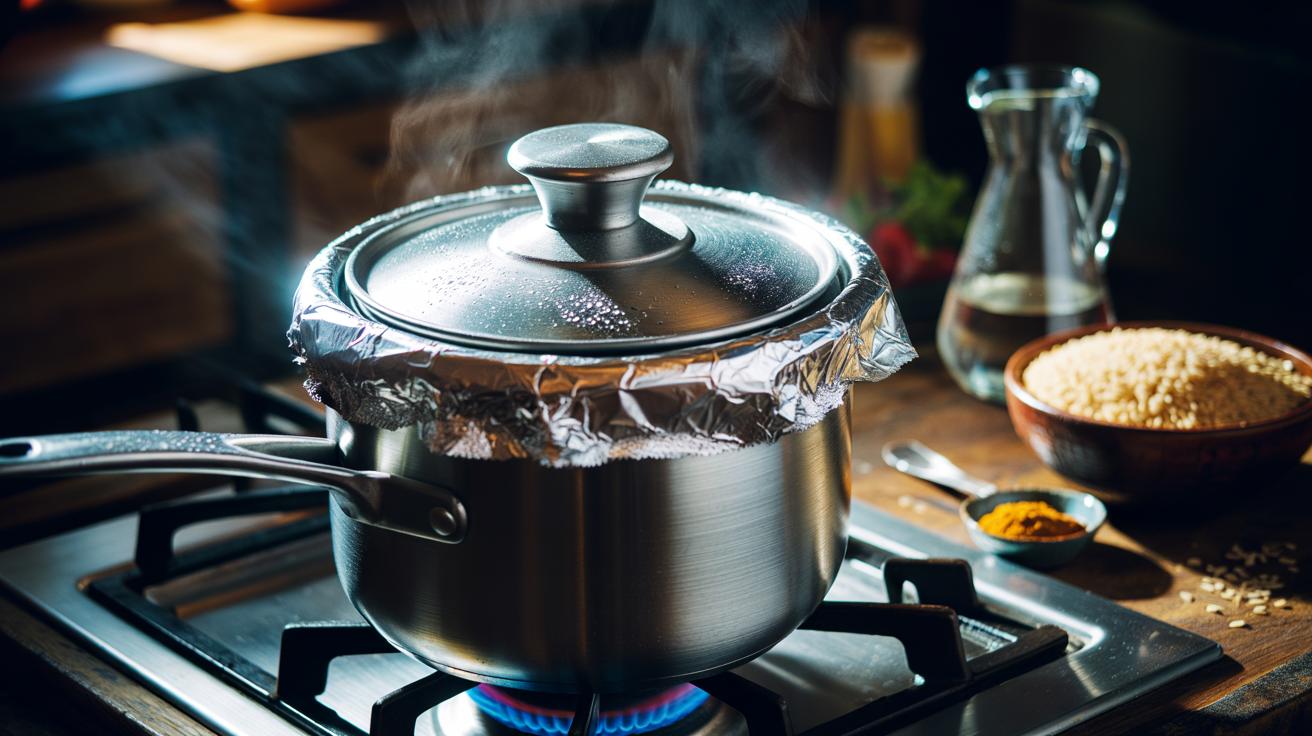
Here’s a small kitchen trick with big payoff: wrap your pot with aluminium foil to trap steam and coax every grain of rice into light, separate perfection. The idea is disarmingly simple. Create a tight seal so vapour can’t escape, then let gentle heat do the rest. Less evaporation, steadier temperature, better texture. Busy weeknight? It works. Dinner party biryani? That too. The method is forgiving, yet precise where it counts. Keep the steam in and the rice will reward you with fluffy, aromatic spoonfuls every time. Think of it as adding a professional lid to a humble saucepan—cheap, fast, and quietly transformative.
Why Foil Locks In Steam
Rice perfection begins with controlled moisture. When you seal a pan with foil, you create a microclimate where steam circulates, condenses on the lid, then rains back down in a continuous cycle. That closed loop limits evaporation losses, so grains absorb precisely the water you measured in, not a drop less. The result? Predictable doneness. Minimal clumping. Reduced risk of scorching. A tight seal is non-negotiable: if vapour escapes, consistency does too. With foil in play, even a thin-lidded pan behaves like a premium, heavy pot, holding heat and moisture instead of bleeding them away.
There’s also quiet science behind the fluff. As the sealed pot warms, internal pressure nudges upward, dropping the boiling point variability across the surface and smoothing out hot spots. That steadiness lets starches gelatinise evenly: amylose separates into airy, distinct grains while amylopectin delivers gentle tenderness. Foil limits vigorous convection, so grains aren’t tossed around, protecting delicate varieties like jasmine. In short, the method keeps the heat low, the environment humid, and the texture poised. Gentle heat plus trapped steam equals a foolproof path to reliable fluffiness, whether you’re tackling basmati for a curry or sushi rice for a weekday roll.
It’s also thrifty. You can cook on the lowest practical hob setting, saving energy without sacrificing outcome. Less time fiddling, fewer rescues with extra water, and no reliance on specialty gadgets. The foil turns your everyday saucepan into a mini rice oven. That’s the quiet brilliance.
The Foil Method, Step by Step
Measure the rice with care—150 g serves two generously—and rinse until the water runs mostly clear to remove excess surface starch. For basmati, a 15–20 minute soak helps elongate grains; jasmine prefers a quick rinse only. Add rice to a medium saucepan with the chosen water ratio (see table below) and a pinch of salt if you like. Bring just to a gentle simmer on medium heat. Now the magic: place a sheet of aluminium foil directly over the pot, crimping tightly around the rim, then set the lid on top for a double seal. Do not lift the lid once the simmer begins.
Reduce the hob to low so you hear the faintest, steady hiss. For white long-grain, 10–12 minutes is typical; for jasmine, 9–11; for short-grain, 12–14. Brown rice needs patience—35–45 minutes on the gentlest heat. When time is up, switch off the hob and leave the pot sealed for 10 minutes. This rest matters: carryover steam redistributes moisture and firms the structure so the rice doesn’t collapse. Remove the lid and foil, fluff with a fork, and let a minute of air exposure lift excess humidity.
Prefer the oven? Combine rinsed rice and boiling water in an ovenproof dish, seal tightly with foil, and bake at 180°C fan for 22–25 minutes (white) or 45–55 minutes (brown), then rest 10 minutes. It’s wonderfully hands-off. Either way, steam contained equals texture controlled.
Choosing Rice, Ratios, and Timing
Different grains drink water differently, and the foil’s seal means you often use slightly less than standard ratios. A good baseline: basmati at 1:1.1–1.2 (rice:water by volume), jasmine at 1:1.1, standard long-grain at 1:1.2, short-grain at 1:1.25, and brown rice at 1:1.75–2. The tighter your seal and the thicker your pot, the lower end of those ranges usually suffices. With foil, you’re reducing evaporation, not flavour. Consider the pan’s diameter too: wide pans evaporate faster before sealing, so reach the simmer swiftly before the lid goes on, then lock it down.
| Rice Type | Typical Ratio (Rice:Water) | Hob Time (Sealed) | Texture Notes |
|---|---|---|---|
| Basmati | 1 : 1.1–1.2 | 10–12 min | Long, separate grains; aromatic |
| Jasmine | 1 : 1.1 | 9–11 min | Tender, slightly clingy; very fragrant |
| Long-Grain White | 1 : 1.2 | 11–13 min | Everyday pilaf-style fluff |
| Short-Grain/Sushi | 1 : 1.25 | 12–14 min | Plush, cohesive, glossy |
| Brown (All) | 1 : 1.75–2 | 35–45 min | Nuttier chew; very forgiving |
If your rice emerges wet, cook a minute longer next time or reduce water by a tablespoon. Too firm? Add a tablespoon of hot water around the edges, reseal for five minutes off heat, and let residual steam finish the job. A drop of oil or a knob of butter can soften edges without greasiness. For pilaf or biryani, bloom spices in fat first, stir in rinsed rice, then proceed with the foil seal. Small tweaks, big results.
The humble sheet of aluminium foil earns its keep by doing one vital thing exceptionally well: trapping steam so rice cooks evenly, gently, and predictably. It makes Monday night rice bowl easy, yet also elevates feasts that demand precision. Seal firmly, simmer softly, rest patiently—that’s the whole philosophy. Once you dial in your pan and ratios, the method becomes muscle memory, freeing you to focus on flavours, not firefighting. Ready to retire mushy middles and crunchy tops for good—and which rice will you try first with the foil magic: basmati, jasmine, or a nutty brown long-grain?
Did you like it?4.4/5 (21)