In a nutshell
- 🧪 Creaminess comes from starch management: heat and agitation release amylopectin, while tostatura (toasting) controls water uptake; the result is an emulsion of starch, fat and stock—not added cream.
- ⏱️ The 10-minute method: toast rice, deglaze with wine, add all boiling stock at once, stir hard briefly, cover 5 minutes, then finish with vigorous mantecatura to achieve the flowing all’onda texture.
- 🍚 Choose the right grain and stock: Carnaroli is forgiving, Vialone Nano hydrates fast, Arborio is creamy but fragile; use hot, well-seasoned stock to maintain momentum and depth of flavour.
- 🥄 Texture insurance: stir with intent during release phases, use a wide pan for even heat and evaporation, and balance gloss with olive oil, cold butter and Parmesan—adjust with hot stock or a butter knob as needed.
- 🧰 Pro hacks: whisk in a little rice starch (blitzed raw rice) to boost viscosity, pre-hydrate by par-cooking for speed, and fold add-ins in the last 3 minutes to keep flavours vivid.
Risotto’s mystique scares busy cooks, yet the secret behind its silkiness is not slow romance but starch management. Treat the grain well and it pays you back. Heat, agitation, and timing unlock a wave-like sauce in minutes, not half an hour. Here’s the promise: you can deliver a glossy, spoon-coating risotto in about 10 minutes at the hob, using smart technique and the right rice. No shortcuts on flavour, only on faff. This guide breaks down the science, then hands you a step-by-step method designed for weeknights, deadlines, and dinner guests who arrive early. Less stirring. More results. Perfect risotto, reliably, every time.
The Science of Starch: Amylose, Amylopectin, and Heat
What makes risotto creamy isn’t cream. It’s amylopectin—the branching starch in Italian short-grain rice—released as granules swell and shear in hot stock. Inside each grain, two starches jostle for attention: amylose (straight chains that help grains hold shape) and amylopectin (the velvety one that thickens the sauce). As temperature climbs into the gelatinisation zone, water sneaks into granules, they puff like tiny balloons, and agitation knocks loosened starch into the liquid. Creaminess is an emulsion of starch, fat, and stock—an elegant suspension, not dairy excess.
Heat matters. So does movement. Toasting the dry rice—known as tostatura—coats grains in fat, moderating water uptake so the outside doesn’t blow out before the centre turns tender. Then the magic begins: hot stock, vigorous stirring in short bursts, and steady simmering. This shears the granules just enough to cloud the liquid with starch while keeping the core al dente. The aim isn’t mindless stirring for 20 minutes; it’s targeted agitation. Release starch quickly, stabilise with fat, capture gloss. Do it right and 10 minutes is plausible. Delicious, even.
One clever accelerant: blitz a tablespoon of raw rice into a fine powder and whisk it into your hot stock. That “house-made” rice starch amplifies viscosity without sacrificing bite. Think of it as ethical cheating from the same ingredient list.
The 10-Minute Method, Step by Step
Serves 2 generously. Use 200 g Carnaroli or Vialone Nano, 600 ml strongly flavoured simmering stock, 60 g cold unsalted butter, 40 g finely grated Parmesan, 1 small onion or shallot, 100 ml dry white wine, olive oil, salt. Optional booster: 1 tbsp rice blitzed to powder stirred into the stock.
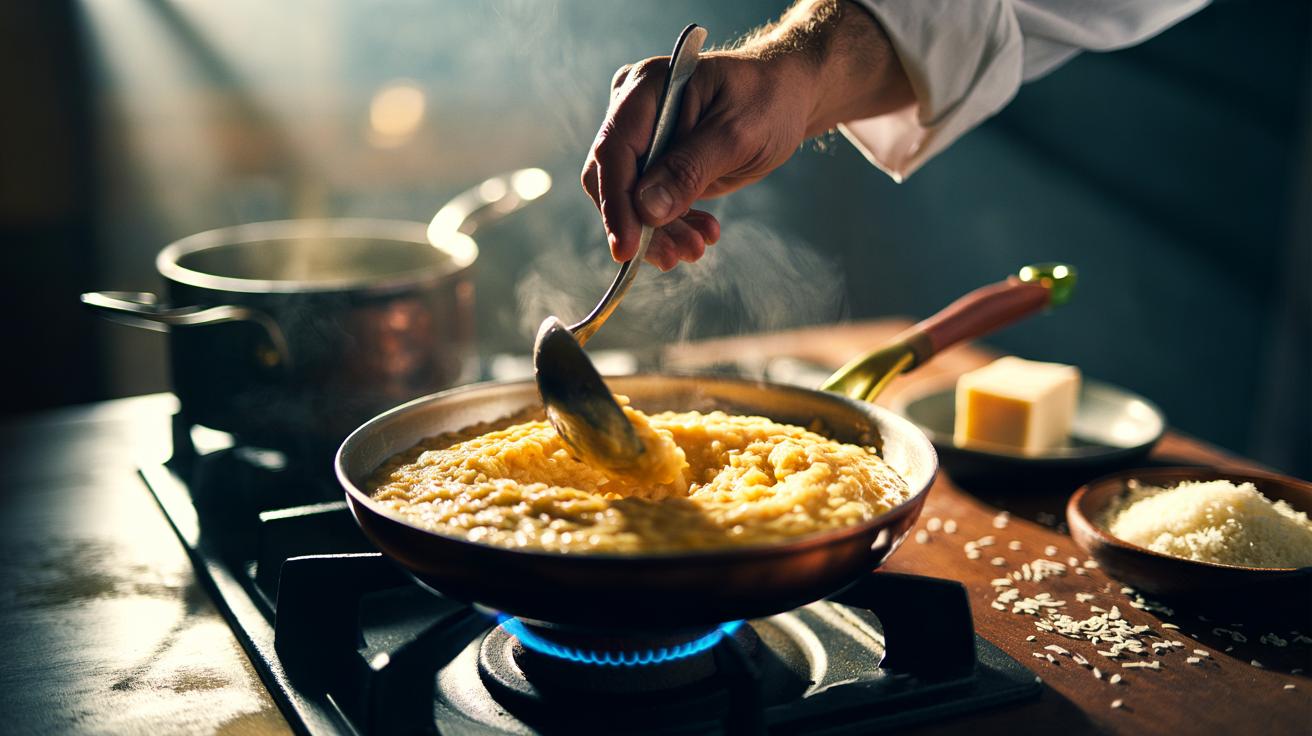
1) Heat a wide pan. Film with oil. Sweat the finely chopped onion until translucent, 2 minutes. Add rice; toast 60–90 seconds, stirring, until edges look pearly and you catch a nutty scent. 2) Splash in wine; let it hiss and mostly evaporate. 3) Add all the boiling stock at once. Yes, all of it. Stir hard for 60–90 seconds to jolt starch into the liquid. 4) Cover, reduce to a lively simmer for 5 minutes. Don’t lift the lid. The trapped heat accelerates gelatinisation.
5) Uncover. Stir briskly for 2–3 minutes, scraping the base and coaxing a creamy suspension. Adjust salt. If the pan looks dry before the rice is just tender, add a splash of extra hot stock or water. If it’s too loose, cook 30 seconds more. 6) Off the heat, add cold butter and Parmesan. Beat vigorously (mantecatura) to create sheen and body. The correct texture is all’onda—spreading like a soft wave, not a mound. Rest 30 seconds. Spoon up immediately, letting it relax on the plate.
Time-check: From stock-on to ladle-down, you’re hovering around 9–11 minutes. The kicker? Flavourings fold in seamlessly—peas, sautéed mushrooms, lemon zest, cooked shellfish—during the final three minutes so they stay vivid.
Choosing the Right Rice and Stock
Rice selection isn’t snobbery; it’s engineering. You want grains with enough amylopectin to build creaminess fast but sufficient amylose to hold a core. Carnaroli is the darling—stable and forgiving. Vialone Nano hydrates quickly, perfect for the 10-minute method. Arborio gets creamy but can blow out, so mind the heat. And stock? It must be hot, seasoned, and full of character. Weak stock equals flat risotto. Keep it at a bare simmer so every addition maintains momentum rather than cooling the pan.
| Rice Type | Typical Amylose | Usual Hob Time | Texture Notes |
|---|---|---|---|
| Carnaroli | 23–24% | 18–20 min (standard); ~10 min (fast method) | Holds shape, glossy finish; highly forgiving |
| Vialone Nano | 20–22% | 14–16 min (standard); ~9–10 min (fast method) | Quick hydration, delicate wave, loves seafood |
| Arborio | 20–22% | 16–18 min (standard); ~10–11 min (fast method) | Very creamy but can overcook; watch closely |
Stock tips: For vegetable risotto, enrich with dried mushroom liquor. For chicken, roast the bones first. Keep salinity balanced; Parmesan and reduction concentrate salt quickly. Hot stock is non-negotiable—temperature continuity is the engine of creaminess.
Texture Insurance: Stirring, Fat, and Finishing
Let’s bust a myth. You don’t need to stir nonstop. You need to stir with intent during the release phases: after the big stock addition and right at the end. Those windows shear starch into the liquid and stabilise the emulsion. Gentle, lazy simmering in between protects the grain. Choose a wide pan for evaporation control and even heat transfer. Narrow pots make glue. Wide pans make waves.
Fat is your friend. Olive oil for the toast. Cold butter at the end to create microscopic droplets that bind with starch. Cheese for umami and body, added off the heat to prevent clumping. If the texture looks stodgy, loosen with a ladle of hot stock and shake the pan confidently. If it looks thin, beat in an extra knob of butter and cook 20 seconds. Serve it when it flows like lava, not when it stands like concrete.
Professional trick for weeknights: pre-hydrate. Boil the rice in unsalted water for 5 minutes earlier in the day, drain and chill. Later, apply the 10-minute method using stock; the grains finish fast yet retain integrity. It’s how restaurants cook to order under pressure without sacrificing quality. The result? Silky, spoonable, deeply flavoured risotto—no wrist-ache required.
In the end, risotto rewards attention, not time. Control heat. Stir smartly. Choose rice that suits your schedule and flavour goals, then lean on hot, bold stock and a cool, buttery finish. The science—starch release and emulsion—does the heavy lifting, gifting you a glossy plate in roughly 10 minutes at the hob. Ready to test the method tonight, and if you do, which direction will you take first: citrus-bright seafood, woodsy mushrooms, or a sharp Parmesan classic with a hidden swirl of peppery rocket?
Did you like it?4.6/5 (26)