In a nutshell
- 🌙 Rapid “overnight” effect: peels leak soluble potassium and sugars, spiking microbial activity; worms drag pieces into the topsoil, boosting structure and gentle nutrient availability fast.
- 🔧 Smart use: chop and cover peels 3–5 cm deep, premix small amounts in containers, add to hot compost or worm bins, and favour a quick soil slurry over questionable “peel tea.”
- ⚠️ Risks and myths: peels are potassium-forward, not complete fertiliser—pair with nitrogen sources; don’t expect a cure for blossom end rot; avoid whole, exposed peels to limit slugs, rodents, and fungus gnats indoors.
- 🔬 Science-backed benefits: soluble K, simple carbs, and moderate cellulose feed bacteria and fungi, which improve aggregation, aeration, moisture retention, and nutrient cycling around roots.
- 🌿 Real-world payoff: with regular, modest applications, beds hold moisture longer, containers compact less, and plants show better stress tolerance—a low-cost, circular boost for thriving gardens.
Banana peels look like leftovers, but in the garden they behave like quiet revolutionaries. Rich in accessible minerals, quick to soften, and irresistible to soil life, they can nudge a tired bed back into action with surprising speed. On UK allotments and balconies alike, gardeners report fast shifts in moisture, microbial buzz, and worm activity. “Overnight” doesn’t mean you’ll wake to instant blooms; it means the soil engine starts revving the moment a peel hits the ground. Used well, peels become a gentle, circular fertiliser that complements, not replaces, your compost and mulches. The trick is knowing how to harness their strengths while sidestepping pests and myths.
What Happens in the Soil Overnight
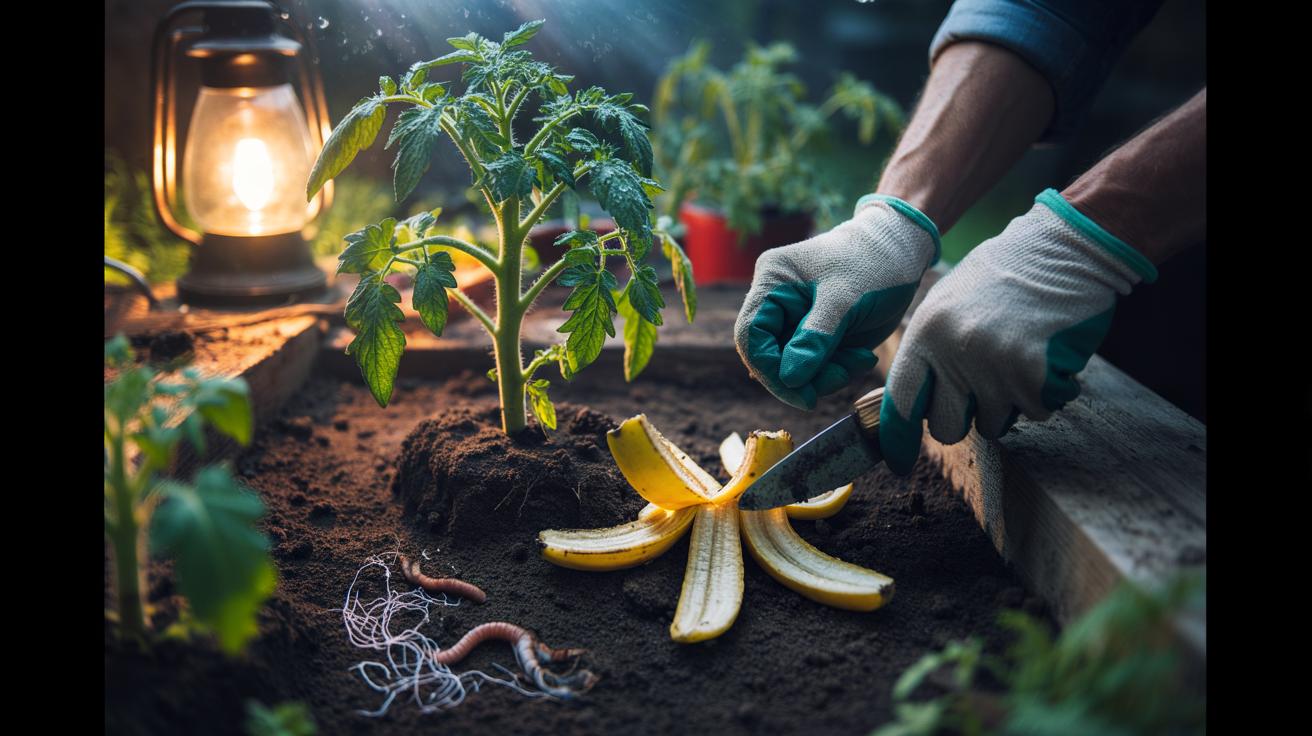
When a fresh banana peel hits damp soil, it begins to soften and leak a cocktail of simple sugars and soluble potassium. That sweetness is a breakfast bell for bacteria and fungi. Their populations can surge within hours, speeding the breakdown of the peel and liberating small amounts of phosphorus, calcium, and trace magnesium. Earthworms follow the microbial trail, pulling fragments underground and mixing them into the top few centimetres, where roots feed. This is the true “overnight” effect: a rapid biological response that improves structure, moisture retention, and nutrient availability before the plant shows any visible change.
Banana peels are soft, with a modest carbon-to-nitrogen balance compared with woody mulches. That means they don’t lock up nitrogen for long. Instead, they decompose swiftly, especially when chopped. The released potassium supports turgor and stress tolerance, which is handy during hot spells or after transplanting. Fungal hyphae thread through the peel fibres, gluing soil particles into crumbs and subtly lifting the soil’s cation exchange capacity. Oxygen pockets form. Drainage improves. Microbes get the feast; your plants get the buffet’s leftovers in a steady, gentle flow.
Smart Ways to Use Banana Peels
Think small, think hidden, think balanced. Chop peels into postage-stamp pieces and tuck them 3–5 cm beneath the surface around tomatoes, roses, and peppers—any crop that appreciates extra potassium. For containers, blend a single chopped peel into 10–12 litres of potting mix before planting, or bury a tablespoon of minced peel near the pot edge, not the stem. Always chop and cover: exposed peels attract pests and slow decomposition. In compost, mix one handful of peels with two of “browns” (shredded paper, dry leaves) to keep the heap sweet, airy, and hot. For wormeries, thin strips spaced out prevent clumping and fruit-fly flair-ups.
| Method | Best For | Time to Notice | Pest Risk |
|---|---|---|---|
| Chopped and buried | Beds, borders, allotments | 1–2 weeks (soil feel), longer for plants | Low if covered |
| Pre-mixed into potting soil | Containers, houseplants | 2–4 weeks steady release | Low |
| Hot composted | Bulk fertility and humus | 3–8 weeks, then apply | Low if compost heats |
| Worm bin | Castings for seedling mixes | 2–6 weeks | Medium if overfed |
Skip the faddish “banana peel tea” unless you filter and use immediately; it’s basically a weak solution that can go anaerobic fast. A safer hack is a quick slurry: blitz chopped peel with rainwater and pour into a shallow furrow, covering with soil. Less exposure, fewer flies, faster integration.
Risks, Myths, and How to Avoid Them
Peels aren’t miracle feed. They’re a potassium-forward amendment with bonus calcium and micronutrients, but relatively little nitrogen. Rely on them alone and leafy growth may stall. Balance is essential. Pair peels with a nitrogen source—well-rotted manure, alfalfa pellets, or a green mulch—to keep the canopy thriving. Never pile whole peels at the base of stems: they can mat, sour, and invite slugs and rodents. Always chop, bury lightly, and cover with a dusting of soil or mulch to keep the surface clean.
Now to myths. Banana peels won’t “cure” tomato blossom end rot overnight. That problem is about uneven watering and calcium transport, not simply a lack of calcium in the soil. Peels help long term by boosting structure and microbial health, which supports steadier uptake. They also won’t replace a complete fertiliser for heavy feeders like squash. And don’t overdo it indoors; houseplant pots clogged with organic scraps invite fungus gnats. Use small amounts, deeply buried, or lean on worm castings instead. Think of peels as a nudge for soil ecology, not a silver bullet for plant nutrition.
The Science Behind the Peel Payoff
Why do peels feel like rocket fuel for soil life? Composition and texture. The peel’s parenchyma tissue carries soluble potassium salts, simple carbohydrates, and phenolic compounds that microbes can quickly metabolise. Potassium leaches readily with moisture, so a night of dew or watering begins the release. Calcium and phosphorus are less soluble but still become available as microbes and enzymes dismantle cell walls. Lignin is modest; cellulose is moderate. That adds up to faster breakdown than twigs or paper, yet not so fast that everything vanishes in a day.
Biologically, the peel acts as a microhabitat. Bacterial colonies set up on the slick inner rind, fungal hyphae knit through the fibrous outer layer, and nematodes graze on the bacterial bloom. As they feed, they excrete plant-available ions and sticky polysaccharides that bind soil crumbs. The result is improved aggregation, better aeration, and steadier moisture—conditions that amplify mycorrhizal performance around roots. Healthier structure means nutrients don’t just wash away; they cycle where roots can reach them. Over weeks, the peel vanishes, but its legacy—humus, mineral cations, and a busier food web—remains, quietly compounding with each addition.
Used thoughtfully, banana peels turn kitchen waste into a subtle soil strategy that rewards patience and consistency. Chop, cover, balance, and let biology do the heavy lifting. In a season, you’ll notice beds that hold moisture longer, containers that slump less, and plants that ride out stress with more poise. It’s small inputs, repeated, that transform soil. What experiment will you try first—slurry in your tomato trench, a handful buried under roses, or a worm-bin trial to brew your own black gold and compare results side by side?
Did you like it?4.3/5 (25)