In a nutshell
- 🍌 Banana peels supply potassium and calcium that restore stem turgor, reinforce cell walls, and aid sugar transport, reviving wilting plants.
- 🧪 Practical applications: brew banana peel tea (24–48h, dilute), make a light fermented peel extract (5–7 days, 1:10), or use dried peel flakes for slow-release nutrition.
- 🐛 Soil microbes mineralize peel nutrients and release organic acids, improving uptake; small, regular doses outperform heavy salts and reduce risk of burn.
- 🔎 Diagnose before dosing: distinguish K/Ca deficiencies from heat stress, overwatering, or root rot; fix environment first, then supplement.
- 🌱 Results and cautions: expect firmer petioles and tighter internodes within a week; avoid overuse (pests, anaerobic spots), and remember peels complement—not replace—a balanced feed.
Gardeners often overlook a powerful tonic hiding in the fruit bowl. Banana peels, routinely destined for the bin, carry a cocktail of plant-available nutrients that can stiffen drooping stems and perk up tired foliage. They’re not magic, but they are chemistry you can see working within days. When plants wilt from nutrient stress, a measured dose of peel-derived potassium and calcium can restore turgor, reinforce cell walls, and rebalance water movement. The result is subtle at first: tighter internodes, fewer bends, firmer petioles. Then it becomes unmistakable. Banana peels turn food waste into a low-cost, low-risk rescue for wilting stems.
Why Banana Peels Strengthen Stems
Healthy stems depend on more than water. They rely on ionic balance, sturdy cell walls, and smooth sugar transport. Banana peels contain abundant potassium (K), the ion that opens and closes stomata, drives osmotic pressure, and helps push carbohydrates through the phloem—crucial for upright, turgid stems. Calcium (Ca) helps cross-link pectins, strengthening cell walls and reducing collapse under wind or weight. Magnesium (Mg), the heart of chlorophyll, keeps photosynthesis humming so stems aren’t starved of energy. Phosphorus (P) supports ATP flow and root vigor, indirectly firming shoots. Feed the ion balance, and stems stand tall. That’s the simple, practical appeal of peel-based tonics.
| Nutrient | Primary Role in Stems | Typical Peel Level (dry) |
|---|---|---|
| Potassium (K) | Osmotic control, sugar transport, turgor | ~3–5% |
| Calcium (Ca) | Cell wall stability, membrane integrity | ~0.5–1% |
| Magnesium (Mg) | Chlorophyll core, enzyme activation | ~0.3–0.5% |
| Phosphorus (P) | Energy transfer, rooting support | ~0.2–0.5% |
There’s another engine at work: microbes. As peels decompose, soil life converts locked-up minerals into plant-available forms and releases organic acids that improve uptake. Microbes are the quiet partners behind stronger stems. A light, regular trickle of peel nutrients nudges physiology back into balance without the shock of heavy salts. It’s not a replacement for complete fertilisers, but it’s a nimble, sustainable nudge when stems signal distress.
Practical Methods: From Tea to Compost
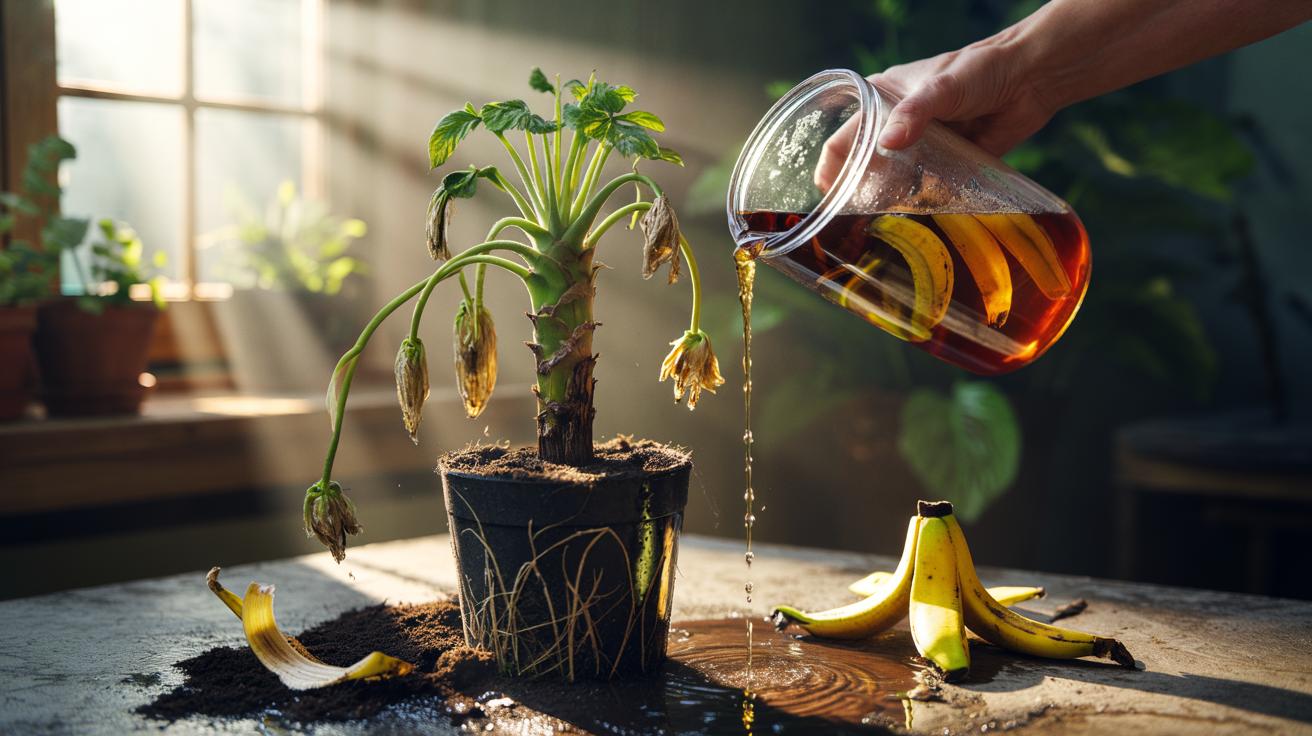
Start simple with banana peel tea. Chop one fresh peel, submerge in 1 litre of clean water, and steep 24–48 hours out of direct sun. Strain, then dilute 1:5 and drench the root zone. Short brew, big difference. For a stronger tonic, make a light fermented peel extract: pack chopped peels in a jar, add water to cover and a teaspoon of sugar, exclude air, and leave 5–7 days until pleasantly sour. Strain, refrigerate, and apply at 1:10. These liquids deliver quick K and Ca when stems flag after heat or transplant shock.
Slow-release options help maintain stem tone. Dry peels in a low oven or sunny window, blitz to flakes, and sprinkle sparingly under mulch. Slice fresh peels thinly and bury 5–8 cm deep to avoid pests, or feed them into an active compost heap where heat sanitises and balances nutrients. Do not overdo it. Excess organics can invite fungus gnats or create anaerobic spots in tight soils. Use small, regular doses, and flush container plants monthly with plain water to prevent minor salt build-up. The goal is gentle, consistent support, not a tidal wave of nutrients.
Diagnosing Wilting and Weak Stems
Not all wilt is hunger. Know the pattern, choose the cure. A classic potassium deficiency shows marginal leaf scorch, weak peduncles, and stems that flop late in the day yet perk up overnight. Calcium shortage skews growth tips and leads to brittle, break-prone shoots. When the issue is nutrient-linked, peel tonics often prompt visible firmness within a week. Heat stress can mimic these signs, but leaves feel hot and limp rather than leathery. If the pot is heavy and cold, think overwatering and transient root suffocation, not nutrition. Match symptom to cause before you dose.
Run a quick field test. Scratch the topsoil; if it smells sour or looks slimy, improve drainage first. Check roots: white and crisp is healthy; brown and mushy signals rot that nutrients won’t fix. Water deeply, then wait; inconsistent watering makes stems lurch between limp and rigid. Once basics are right, deploy peel-based support as a complement, not a crutch. Correct the environment, then fortify the plant. With that sequence, the potassium-calcium lift from banana peels can transform a sagging stem into a steady one, and keep it there.
Banana peels won’t replace a balanced feed, but they are a smart, circular boost for stem resilience, especially when plants whisper for help rather than scream. Low waste. Low cost. Real impact. Applied thoughtfully, they restore turgor, thicken cell walls, and keep sugars moving—exactly what faltering stems need. Small inputs, steady gains. If you’ve tried synthetic quick fixes and seen only brief relief, why not test a gentler rhythm: measured peel tonics alongside sound watering and soil life? What plant in your patch will you revive first, and how will you track the change over the next fortnight?
Did you like it?4.6/5 (22)