In a nutshell
- ☕ Low-dose caffeine acts as a micro-stimulant for tomatoes, boosting root vigour and subtly deterring pests, while tannins and polyphenols feed soil microbes for better structure and moisture retention.
- 🧰 Practical use: split used tea bags, scatter leaves thinly 5–8 cm from stems, cover with compost, or apply a diluted 1:3 “leaf tea” soil drench; composting tea leaves is the safest, most stable route for sustained fertility.
- ⚠️ Safety first: avoid caffeine overload (watch for leaf curl or stalled growth), beware plastic-sealed bags, rinse leaves to soften impact, prevent mould by drying and spreading thinly, and keep soil near pH 6.0–6.8.
- 📅 Dosage and timing: used leaves 1–2 tbsp per plant fortnightly; soil drench 250–500 ml monthly; composted leaves 1–2 L/m² pre-planting; decaf and loose-leaf options reduce risk—tea complements, not replaces, a complete fertiliser.
- 🐌 Tangible gains: lighter slug pressure, stronger roots, steadier fruit set, and faster establishment through an energised soil microbiome, while turning everyday kitchen waste into productive plant power.
Gardeners love a hack with a hint of science, and this one blends both. Used tea bags—rich in plant-friendly compounds—can help drive vigorous tomato growth when applied with care. The quiet star is caffeine, a natural alkaloid that can nudge metabolism, deter pests, and energise soil life at low doses. The supporting cast—polyphenols, tannins, potassium, and trace nutrients—builds structure and resilience in beds and containers. The trick is harnessing the benefits while avoiding overload. Done right, tea bags don’t just recycle kitchen waste; they accelerate strong root systems, thicker stems, and a steadier fruit set. Here’s how to turn yesterday’s brew into today’s bumper crop, fast.
The Science: Caffeine, Tannins, and Tomato Physiology
Tomatoes are hungry, fast-growing plants, and they respond keenly to tiny biochemical cues in their environment. Low concentrations of caffeine can act as a signalling nudge, subtly increasing cellular activity and supporting root vigour, while discouraging soft-bodied grazers such as slugs and snails. At low doses, caffeine often stimulates; at high doses, it can inhibit. Tea leaves also carry polyphenols and tannins that feed soil microbes which, in turn, liberate nutrients for the plant. Think of it as a micro-stimulant paired with a slow, biological handover of fertility.
Nutritionally, tea contributes modest amounts of nitrogen, a sprinkle of potassium, and traces of phosphorus, manganese, and magnesium. While tea’s brew is acidic, spent leaves have a far gentler impact on soil pH, especially once composted. Tomatoes favour slightly acidic conditions (around pH 6.0–6.8), and tea-amended compost sits comfortably within that window when used sensibly. It’s the microbial wake-up call that often matters more than the raw NPK numbers. That boosted micro-life improves aggregation and moisture retention, helping fruiting trusses ride out dry spells and erratic watering.
There’s also a defensive edge. Caffeine and phenolics are natural plant defence compounds; in soil, they can reduce palatability for some pests. Slug deterrence won’t be absolute, but the barrier is real. Couple that with healthier roots, and you get sturdier growth and fewer setbacks during the crucial stretch from flowering to first blush.
Practical Methods: Using Tea Bags in Soil and Mulch
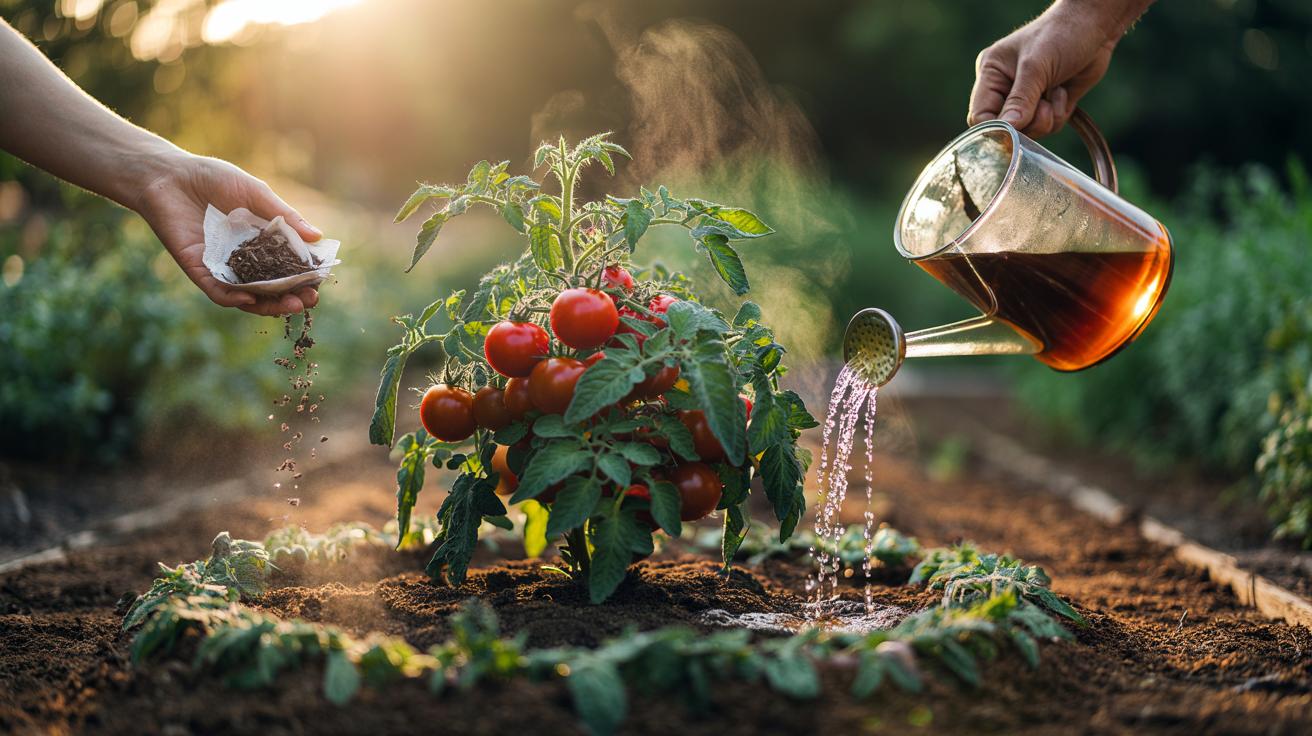
Start with used tea bags that have cooled completely. Tear them open, tip out the leaves, and scatter thinly around the root zone, keeping material at least 5–8 cm from the stem. Top with a fine layer of compost or mulch. Do not bury fresh, intact bags right against roots; concentrated caffeine and a tight, wet packet can stress young plants and encourage mould. In containers, mix a small pinch of tea leaves into the top 2–3 cm of compost and water in lightly.
For a rapid boost, make a mild “leaf tea.” Steep two to three used bags in one litre of water for 12 hours, then dilute 1:3. Apply as a soil drench, not a foliar spray. One watering every two weeks in early growth is ample. Less is more with caffeine. If leaves begin to curl or growth stalls, stop applications and flush with plain water.
Composting is the safest route. Add tea leaves to your heap as a “green” input, balancing with shredded cardboard or dry leaves. Over a few weeks, microbes mellow the caffeine and stabilise nutrients, delivering a crumbly amendment tomatoes adore. Mixing a spadeful into planting holes, or raking a thin layer across beds pre-planting, sets the stage for robust transplants.
If slugs are a menace, sprinkle a narrow ring of dried tea around each plant and cap it with straw or bark mulch. It’s not a fortress, but combined with copper barriers or evening patrols, it reduces damage. Pair tea leaves with crushed eggshells for calcium and a scoop of well-rotted manure for sustained fertility, building a multi-layered defence-and-feed system.
Safety and Limits: Avoiding Caffeine Overload and Mould
Tea can tip from tonic to trouble if overdone. High doses of caffeine inhibit root elongation and seedling growth, and tannins can briefly tie up nutrients. Keep applications light, infrequent, and never concentrated around stems. If you’re also using coffee grounds, reduce tea inputs to avoid doubling the alkaloid load. Watch for signs of stress: leaf curl, dull colour, or stalled growth signal it’s time to pause.
Packaging matters. Some tea bags contain polypropylene fibres to heat-seal the seam. Those won’t break down in soil and can leave microplastics. Opt for bags labelled plastic-free, or, better, split the bag and compost only the leaves. Remove staples. If you’re uncertain, switch to loose-leaf tea; it delivers all the plant benefits without any synthetic residue. Rinsing used leaves with cool water reduces surface caffeine and tannins, softening the impact on tender roots.
Hygiene counts. Wet clumps of tea invite mould and fungus gnats, especially in warm greenhouses. Dry leaves before storage, scatter thinly, and cover with compost to maintain aeration. In heavy clay beds, too much organic fine matter can cap the surface; break it up with horticultural grit or coarse mulch. Conduct a simple soil pH test mid-season. If acidity creeps downwards, buffer with garden lime or a calcium-rich amendment to keep tomatoes in their comfort zone.
Quick Reference: Dosage, Timing, and Compost Options
Use this at-a-glance guide to keep applications practical and safe for tomatoes in beds, grow bags, or patio pots. The rates below assume established plants 30–40 cm tall. Scale down for seedlings and up slightly for heavy-feeding heritage varieties once they’re flowering. Always observe, then adjust.
| Material | Main Benefit | Primary Risk | How to Use | Typical Rate |
|---|---|---|---|---|
| Used tea leaves (rinsed) | Microbial stimulation, light nitrogen | Caffeine buildup if overused | Scatter and cover with compost | 1–2 tbsp per plant fortnightly |
| Mild leaf tea (soil drench) | Quick hydration and trace nutrients | Root stress if too strong | Dilute 1:3; water soil, not leaves | 250–500 ml per plant, monthly |
| Composted tea leaves | Stable fertility, better structure | Minimal when matured | Mix into bed pre-planting | 1–2 litres per square metre |
| Decaf tea leaves | Nutrient boost with low caffeine | Very low | Use as for used tea leaves | As above |
| Loose-leaf tea | Plastic-free organic matter | Same as used leaves | Sprinkle and mulch over | Small handful per plant monthly |
Timing is simple. In early season, prime the soil with composted tea leaves. During vegetative surge, use light scatterings or a diluted drench at most once a fortnight. As trusses set, shift focus to balanced feeds with calcium and potassium, letting tea play a supporting role. Never let tea replace a complete tomato fertiliser; it’s a complement, not the main course. With that balance, you’ll see faster establishment, tidier canopies, and fruit that keeps coming.
Used thoughtfully, tea bags turn a daily ritual into a garden asset. You’ll reduce kitchen waste, feed the soil community that underwrites healthy crops, and add a gentle defensive edge against pests, all without expensive inputs. The key is restraint: light doses, good aeration, and preference for composted material. Feed the soil, not just the plant, and tomatoes repay you in vines heavy with fruit. Ready to put the kettle on and test a measured, evidence-led tea regime on your tomatoes this week—what small trial will you set up to see the difference for yourself?
Did you like it?4.6/5 (24)