In a nutshell
- 🧪 Science-first: Onion saponins act as gentle surfactants, form micelles, lower surface tension, and promote water sheeting for a streak-free finish.
- 🧰 Method: Halve and rub the onion, mist a 1:5 onion-juice:water mix, squeegee top-to-bottom, then buff edges with a dry microfibre; optional rinse with distilled water.
- 🌬️ Practical tips: Chill the bulb to limit fumes, ventilate, use a fine-mist sprayer, keep separate wet/dry cloths, and add a drop of lemon/eucalyptus to tame odour.
- ✅ Benefits: Fast, low-cost, biodegradable, minimal residue; excels on mirrors, interior windows, shower screens, and greasy kitchen glass.
- ⚠️ Safety: Don’t mix with bleach or ammonia; test near aftermarket tints; store onion solution chilled and use within 24 hours.
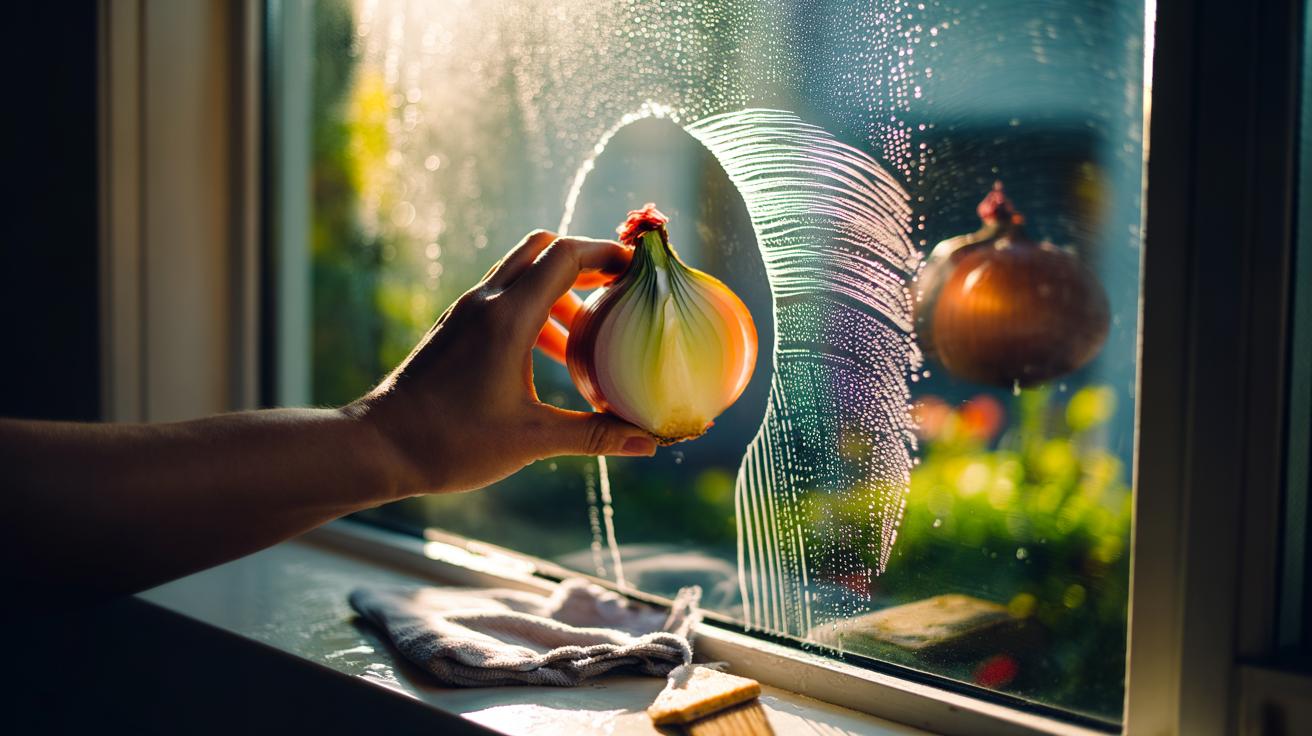
Household hacks rarely sound as odd as rubbing a window with an onion, yet this old-world trick has serious science behind it. Inside the bulb lurk naturally occurring saponins—molecules that behave like gentle, plant-based surfactants. They loosen grime, lift oily films, and help water sheet off glass rather than beading into frustration-inducing droplets. The payoff? Crisp panes, fewer streaks, and a finish that rivals store-bought sprays without the synthetic perfumes or lingering residue. Used correctly, onions work fast and cost pennies. Used cleverly, they also minimise odour and tears. Below, the method, the chemistry, and the practical tweaks that make this unusual tactic a smart, sustainable clean.
Why Saponin in Onion Beats Streaks on Glass
Think of saponin as a bridge between oil and water. Each molecule carries a water-loving head and a fat-friendly tail, so it corrals grease into tiny spheres known as micelles. On glass, that means fingerprints, kitchen haze, and traffic film are lifted off the surface rather than smeared around by a cloth. Crucially, the saponin-rich juice from an onion also lowers water’s surface tension, encouraging an even sheet that dries clean. That single effect—promoting sheeting rather than beading—is why streaks fade fast.
Unlike many commercial cleaners, onion-derived compounds leave scant residue. No cationic polymers to cling. No waxes to haze under sunlight. Just a faint film that buffs away in seconds with a dry microfibre. There’s a bonus: trace sulphur compounds help cut odours and may discourage bacterial growth on damp cloths, keeping your kit fresher between washes. Results are particularly striking on bathroom mirrors and interior windows, where soap vapour and skin oils tend to smear. Use it before a sunny day—the finish holds up better when the glass warms evenly.
Step-by-Step: The Onion and Saponin Cleaning Method
This method works for windows, mirrors, shower screens, and glass tabletops. Start simple, adjust for grime. Cold onions release fewer eye-watering vapours, so chill one for 15 minutes if you’re sensitive. Use distilled water where limescale is a local menace. And keep a clean, dry microfibre cloth for the final buff—its ultra-fine fibres magnify the sheeting effect and leave edges razor-sharp.
| Step | What to Do | Why It Matters |
|---|---|---|
| 1 | Halve an onion; score the cut face lightly. | Releases more saponin-rich juice for better wetting. |
| 2 | Rub the cut face over the glass in overlapping arcs. | Loosens oils and distributes surfactant evenly for streak-free sheeting. |
| 3 | Mist with a 1:5 onion-juice-to-water spray, or wipe with a damp cloth. | Thin layer activates micelle formation and lifts remaining grime. |
| 4 | Squeegee top to bottom; finish edges with a dry microfibre. | Removes slurry; the buff erases any faint residue lines. |
| 5 | Optional: final pass with distilled water. | Counters hard-water spots in high-limescale areas. |
Do not over-wet; excess liquid causes runs that dry into trails. For stubborn kitchen film, a second pass does more than scrubbing harder. If the smell worries you, add a drop of lemon or eucalyptus to the spray bottle—the citrus cuts sulphur notes without impairing the surfactant action. Store leftover mix chilled for 24 hours only; freshness preserves performance.
Safety, Smell, and Practical Tips for Everyday Use
Onions are mild on glass but can be assertive on the nose. Chill the bulb, ventilate the room, and work swiftly. Avoid mixing onion solutions with bleach or ammonia. That’s basic safety—never blend unknown household chemicals. For car windows, test first on a small corner of any aftermarket tint; the method is safe for glass but adhesives vary. On shower screens, pair the onion pass with a daily squeegee routine and you’ll see fewer water marks week by week.
Cloth discipline matters. Keep one microfibre for wet work and another strictly for dry buffing; crossed roles invite streaks. If your tap water is hard, pre-rinse the cloths in distilled water to stop mineral deposits redepositing on the pane. Use a fine-mist sprayer—the goal is a whisper-thin film that dries clean, not a drip-fest. For odour control, wipe frames last and toss cloths straight into the wash. Compared with fragranced sprays, the onion approach is biodegradable, low-cost, and surprisingly fast once you’ve got your rhythm.
For frugal cleaners, allergy-conscious households, or anyone tired of rainbow smears, the onion-and-saponin trick delivers clarity with minimal kit and zero harsh solvents. The technique scales: half an onion for a bathroom mirror, a small spray bottle for a row of windows, a bucket dilution for outside panes on a dry day. Use clean tools, keep the liquid light, and let the surfactant do the heavy lifting. You’ll notice reflections sharpen and edges sparkle, quietly and consistently. Ready to test a humble kitchen staple against your toughest glass and report which surface surprised you most?
Did you like it?4.7/5 (29)