In a nutshell
- 🔬 Explains why static cling spikes in dry, warm drums—synthetics on the triboelectric series, low humidity, and friction create opposite charges that make fabrics stick.
- ⚡ Shows how a crumpled ball of aluminium foil acts as a roaming conductor, equalising charge on contact; more ridges mean more touchpoints and faster discharge.
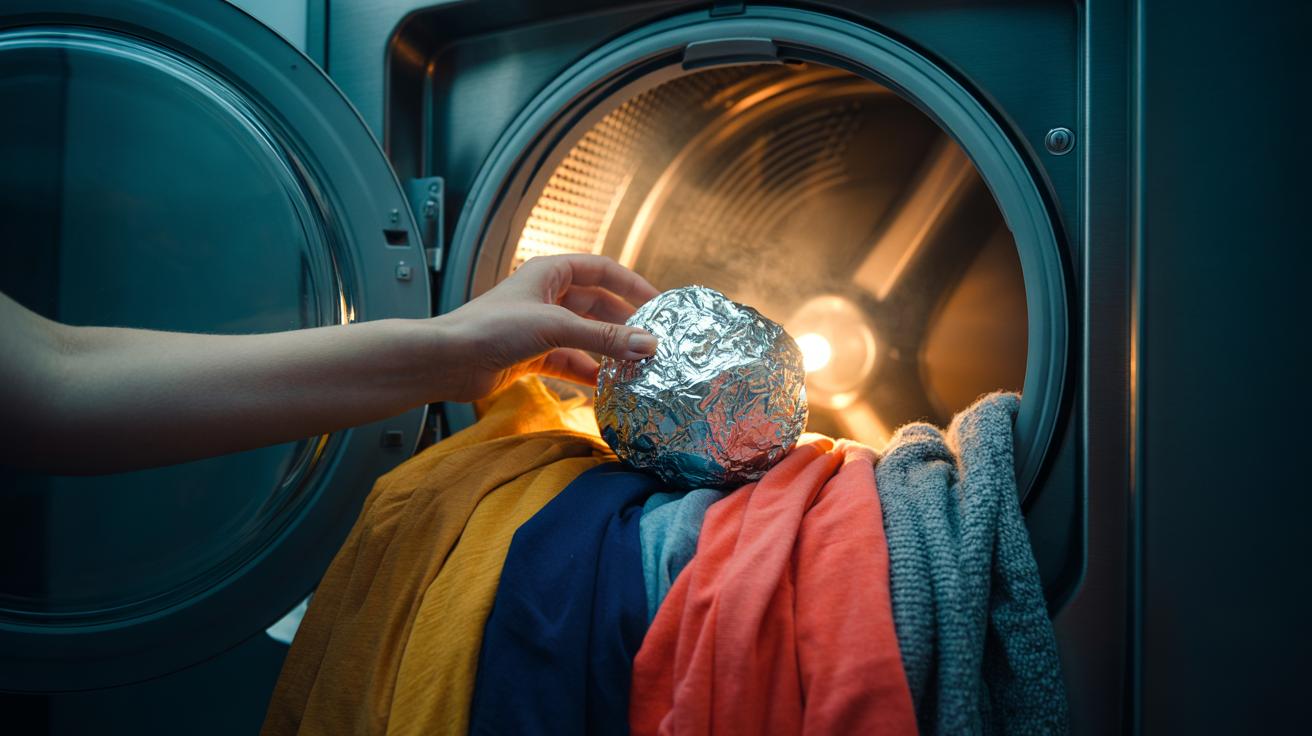
- 🧺 Practical method: form a firm, orange-sized foil ball (use two for heavy synthetics), toss in from the start, or swipe air-dried items; cling fades in seconds.
- 🛡️ Safety and care: household dryer temps won’t melt foil; keep edges smooth to protect delicate fabrics, expect a soft tap, and note it works in gas and heat‑pump dryers alike.
- ♻️ Eco and savings: reuse each ball for 20–30 cycles, skip single-use dryer sheets, recycle clean foil, and reduce energy by avoiding over-drying.
Dry laundry that crackles, clings, and snaps is a winter nuisance as familiar in British homes as the whirr of the tumble dryer. The surprise hero? Aluminium foil. Crumpled into a compact ball and tossed into the drum, it tames static in seconds, easing skirts from tights and socks from shirts. There’s no fragrance, no residue, and no mystery. Just everyday metal and basic physics. For a quick, cheap, and reusable fix, a foil ball can stop cling almost immediately. Here is how the simple metallic shine works, why it’s safe, and the best way to use it without scuffing fabrics or dulling your favourite knits.
Why Clothes Build Static in the First Place
Static arises when fabrics rub, touch, and separate, trading electrons like petty thieves in a crowd. In a tumble dryer’s dry, warm air, that constant friction drives a charge build-up. Synthetics are the usual culprits. Polyester, nylon, and acrylic sit far apart on the triboelectric series, and their energetic shuffling leaves one item positively charged and another negatively charged. Opposites attract. Clothes cling. Hair lifts. Tiny shocks zap your knuckles as you fold.
Humidity is the quiet moderator. Damp air offers a path for charge to leak away, so British summers often mean fewer problems. Radiator-dried loads and winter cycles, by contrast, are arid. Cotton can misbehave too when bone-dry, but blends magnify the effect. The drier the drum and the higher the friction, the fiercer the static. Fabric softeners can mask it, but they coat fibres with chemicals that some households would rather skip. Hence the appeal of a metal that simply gives electrons somewhere better to go.
How Aluminium Foil Discharges Static Fast
Metal is a conductor. When a crumpled ball of aluminium foil tumbles with your garments, it continuously touches different pieces, providing a roaming contact point. Charges hop onto the foil, spread across its surface, and even out. That rapid equalisation kills the voltage difference driving cling. Think of it as a portable earth, moving through the load and levelling the electrical mood with every tap, bump, and brush. The result is calm cloth that hangs, not clings.
There’s also a geometry trick at work. A tightly crumpled foil ball has many contact points. Each ridge and crease increases the chance of micro-contact with fibres, speeding up discharge without snagging. It’s mechanically gentle, electrically effective, and blissfully scent-free. For most medium loads, one tennis-ball-sized sphere suffices; heavy synthetic loads may benefit from two.
| Item | Mechanism | Reusability | Chemicals/Scent | Best For |
|---|---|---|---|---|
| Aluminium foil ball | Conducts and equalises charge | 20–30 cycles | None | Synthetics, mixed loads |
| Dryer sheets | Coats fibres to reduce friction | Single use | Yes | Fragrance lovers |
| Wool dryer balls | Separates fabrics, adds agitation | Hundreds of cycles | None | Heavy textiles, towels |
If you want immediate, repeatable, and low-cost static control, metal wins on physics alone. It doesn’t soften in the cosmetic sense, but it removes the cling that makes garments look rumpled and tired the moment they leave the drum.
Step-By-Step: The Foil Ball Method
Start with a sheet about the size of a tea towel. Crumple it tightly, compressing until you get a firm ball roughly the size of a small orange. Add a second sheet if it feels flimsy; stiffness improves contact and longevity. Pop the ball into the tumble dryer with the damp load. No need to pause mid-cycle. Let it work from the start.
Use your usual program. For mixed fabrics, a medium heat and regular spin are fine. The foil will jostle, tap, and skim across fibres as garments separate and rejoin. The magic is in movement: every touch offers a path for charge to flee. For stubbornly clingy synthetics—gym kit, microfleece, tights—add a second ball to increase the number of contact points. Remove the foil after the cycle and store it near the machine; it will serve again and again.
If you air-dry, keep a small square by the laundry basket. Before hanging, gently swipe the fabric surface with the foil, like a quick polish. That brief contact equalises charge and stops the crackle before it starts. Simple. Fast. Effective.
Safety, Myths, and Eco Considerations
Domestic dryers run well below temperatures that would threaten aluminium foil. The material is stable; it won’t melt at laundry settings. That said, check your machine: ensure the drum is intact, and keep the ball compact so there are no sharp corners to snag delicate weaves. Always follow garment care labels, especially on silk, lace, or embellished items. If a piece is “air dry only,” keep it out of the drum, foil or no foil.
Noise? Yes, a gentle tap-tap is normal. Lint? Foil doesn’t shed, and it won’t clog filters. Sparks? The point is to prevent the voltage differentials that cause them. Avoid wrapping the foil around anything; just let it roam. In gas dryers or heat-pump models, the principle and practice are the same: a moving conductor equalises charges as it tumbles with the load.
On sustainability, the foil ball is reusable for dozens of cycles, then recyclable if clean. It helps skip single-use dryer sheets and reduces chemical coatings released to wastewater and air. Pair it with air-drying when weather allows, and you’ll cut energy use too—static thrives in over-dried loads, so try shorter cycles and stop once garments feel just dry.
From the triboelectric tussle inside your dryer to the serene finish on a wool jumper, the fix could hardly be simpler: a small ball of aluminium foil that turns chaotic charges into calm cloth. It’s thrifty, quick, and grounded in everyday physics rather than perfume and coatings. Once you’ve seen tights unpeel themselves in seconds, you won’t go back. Will you try the foil method on your next load, or do you have a homegrown static-busting trick you swear by that the rest of us should test?
Did you like it?4.5/5 (21)