In a nutshell
- 🔧 Aluminium foil’s micro-ridges act as flexible scrapers; with a bicarbonate of soda slurry they lift polymerised grease fast—in about 5 minutes.
- 🧪 The method: warm rinse, bicarb + washing-up liquid slurry (optional pinch of salt), gentle circular strokes with a crumpled foil ball, hot rinse, optional vinegar to brighten.
- 🍳 Surface rules: safe on stainless steel, uncoated cast iron, and carbon steel; never on non-stick, anodised aluminium, or delicate enamel.
- 🛡️ Safety checks: test a small patch, keep it wet, use light pressure; for cast iron, dry and oil to re-season after cleaning; stop if seasoning lifts.
- ⏱️ Strategy: if residue resists, soak and retry instead of scrubbing harder—aim for controlled abrasion of grime, not the pan itself.
It sounds like a gimmick, yet a crumpled ball of aluminium foil can make a filthy pan look respectable in minutes. The trick isn’t magic. It’s mechanics and chemistry working together, delivering the kind of quick clean that cuts through sticky caramel, lacquered protein, and baked-on oil without pricey pastes or specialist pads. Done right, it’s fast. Five minutes, often less. Done badly, it can scuff the wrong surface. Know your pan, choose the right helper solution, and let the foil’s micro-edges do the heavy lifting. Here’s the science, the method, and the smart limits that keep your cookware safe while you chase that satisfying, super-clean shine.
Why Aluminium Foil Lifts Grime So Fast
The secret is structure. When you crumple aluminium foil, you create thousands of jagged micro-ridges. Those points behave like a flexible field of scrapers, grabbing carbonised residue that flat sponges skate over. Add a thin film of water and bicarbonate of soda (baking soda), and you get gentle alkalinity that loosens polymerised fats. That combo shifts mess quickly because the foil’s edges bite while the alkali softens and saponifies greasy build-up.
There’s also a mild galvanic effect when aluminium meets stainless steel in an electrolyte such as salty, soapy water. It doesn’t “magnetise” dirt, but it can help undermine oxidised films clinging to metal. The foil ball conforms to curves and rivets, so it works at angles that brushes miss. Short passes. Light pressure. Let abrasion, not force, do the job.
Never use this on non-stick coatings, anodised aluminium, or delicate enamels. It’s safe on stainless steel, uncoated cast iron (for the metal, not the seasoning), carbon steel, and tough glass. Test a thumbnail-sized patch first. You want residue coming up, not the surface itself.
Five-Minute Method: Step-By-Step
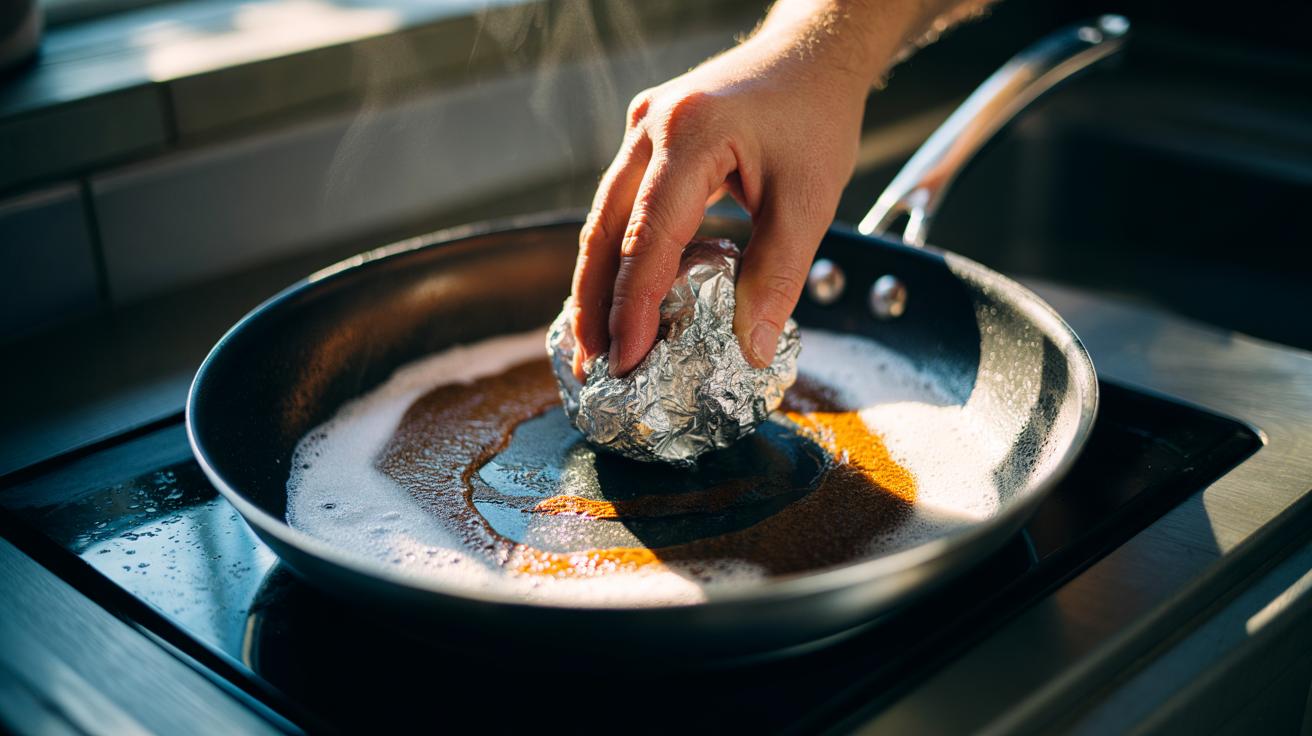
First, prime the battlefield. Rinse the warm pan to lift loose debris, then scatter a teaspoon of bicarbonate of soda across the worst spots. Add a few drops of washing-up liquid and a splash of hot water to create a thin slurry. For burnt sugar or cheesy crusts, sprinkle a pinch of table salt for extra bite. Give it thirty seconds to wet out and soften.
Crumple a palm-sized ball of aluminium foil, rough side out. Start with small, circular strokes over the deposits, keeping the surface glistening with the slurry so you’re scouring, not scraping dry. Work rivets, corners, and the base ring methodically. Stubborn blotches? Park the foil ball on them and twist like you’re polishing a coin. Most pans break free in two to four minutes; the remainder is quick detailing.
Rinse hot, check the sheen, and repeat on any survivors. For cast iron, remove the gunk, dry over heat, then oil lightly to restore the seasoning. If black polymer flakes rather than brown gunk comes off, stop—your coating or seasoning may be lifting. Neutralise alkali with a splash of vinegar on stainless steel if you want that bright, squeak-clean finish, then rinse again and dry.
What Works, What Doesn’t: Surfaces, Soils, and Solutions
Different pans, different rules. The foil ball excels on stainless steel fryers, griddle plates, roasting tins, and thick glass bakeware. It tames caramel, stuck eggs, roasted potato lacquer, and seared-on fond. Add bicarbonate of soda for greasy stains; use a tiny pinch of salt for glass or stainless where you need just a bit more cut. For tomato-char or sugary bakes, a minute-long soak in hot water first makes the five-minute promise realistic.
| Surface | Use Foil? | Helper Mix | Notes |
|---|---|---|---|
| Stainless steel | Yes | Bicarb + washing-up liquid | Rinse hot; optional vinegar brightening |
| Cast iron (uncoated) | Yes, carefully | Salt + a little oil or bicarb | Re-season after cleaning |
| Carbon steel | Yes, lightly | Bicarb slurry | Protect seasoning; avoid aggressive scrubbing |
| Non-stick coatings | No | Soft sponge only | Foil will damage the coating |
| Enamelled surfaces | Generally no | Non-abrasive cream | Test discreetly if desperate |
When in doubt, choose the softer tool. The aim is controlled abrasion against residue, not the pan itself. If a mark won’t shift in five minutes, stop and soak with hot water and bicarb for ten, then try again. That protects finishes and your patience.
There’s a special pleasure in reviving a pan that looked destined for the bin. A simple ball of aluminium foil and a pantry staple or two can do that in a lunch break, not a lost afternoon. The key is precision: right surface, light touch, quick chemistry, clean rinse. Respect the limits and this five-minute tactic becomes a reliable weekday rescue as well as a weekend deep-clean. What grimy challenge is currently mocking you from the drying rack—and how will you tailor the foil method to conquer it today?
Did you like it?4.4/5 (26)