In a nutshell
- ⚗️ The combo of baking soda and carbonated water creates mild alkalinity plus carbonic-fizz agitation and soft micro-abrasion, lifting limescale and soap scum in about 10 seconds.
- ⏱️ Quick method: dust the tap with baking soda, drizzle sparkling water, wait 8–10 seconds, wipe and buff; use a soft toothbrush for rings; never mix with bleach and rinse seals.
- 🛡️ Safe on chrome and stainless steel, but avoid natural stone and lacquered or gold-plated finishes; test aluminium; don’t pair with commercial descalers or seal vinegar+bicarb.
- 💷 Cheaper and greener than typical cleaners: pennies per session, seconds to shine, low fumes, and less plastic waste.
- 🧰 Weekly upkeep prevents build-up; clean the aerator face with a toothbrush, keep the fizz brief, and finish with a microfiber buff for a mirror finish.
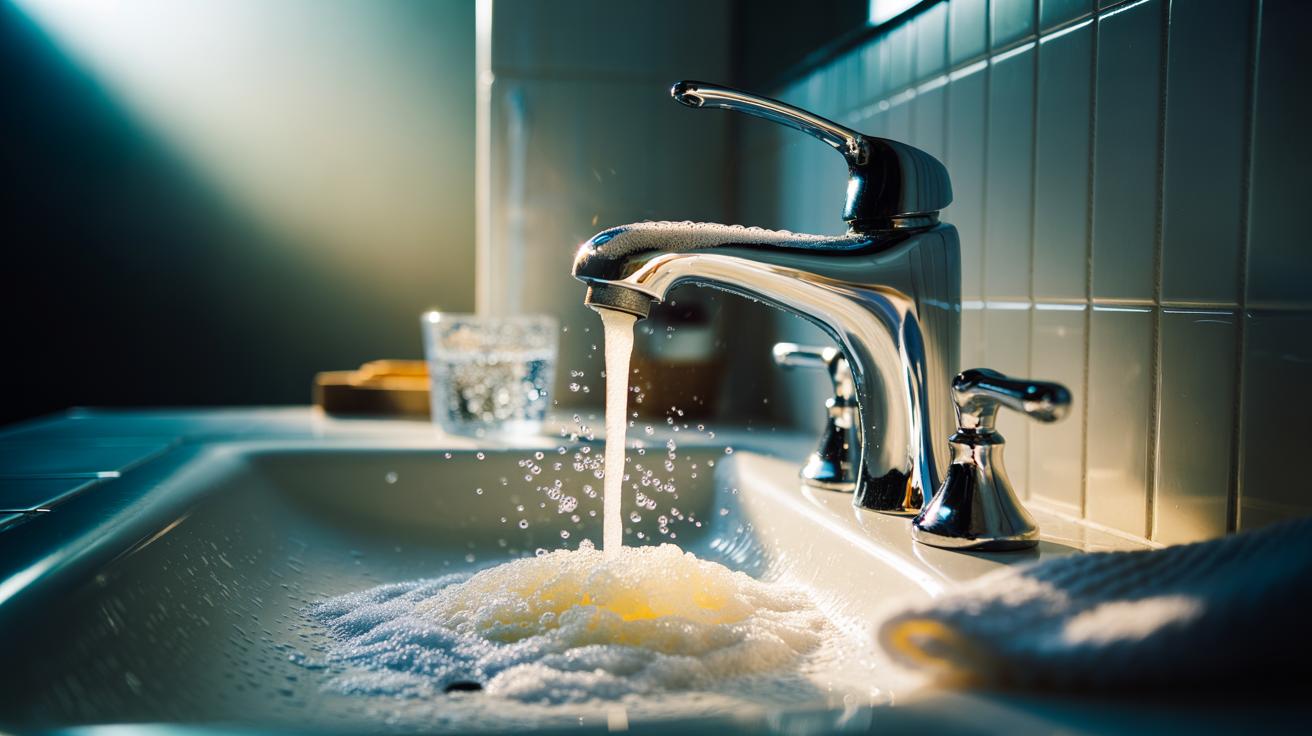
It sounds like a stunt. Yet in bathrooms across Britain, a humble kitchen staple is stealing the thunder of pricey sprays. Sprinkle a touch of baking soda on a dull tap, add the sparkle of carbonated water, and watch grime lift almost instantly. The fizz isn’t just theatre; it’s chemistry doing the heavy lifting while you sip your tea. No choking fumes. No long scrub. Just a quick, bright gleam that makes chrome look freshly installed. Ten seconds really can reset a faucet’s shine when you pair bicarbonate with bubbles the smart way. Here’s why it works—and how to nail the method without harming your finishes or your wallet.
The Science: How Bicarbonate and Carbonation Dislodge Limescale
Tap tarnish is a cocktail of limescale (calcium and magnesium deposits), soap scum, and skin oils. Baking soda, or sodium bicarbonate, is a mild alkali that breaks down fatty acids in soap residues and loosens film. The trick accelerates when you introduce carbonated water. Those CO₂ bubbles create a weak carbonic acid on contact, which briefly reacts with bicarbonate to release a rapid fizz. That fizz isn’t mere noise: it physically agitates the deposit layer, sending micro-bubbles under the grime so the crust lifts with minimal force. Meanwhile, carbonate ions begin tying up calcium, helping nudge scale towards release.
There’s a second mechanic at play. Baking soda’s particles are gently abrasive—hard enough to cut through film, soft enough to spare chrome. Add fizz and you get a micro-jackhammer effect: gas pushes debris away while the soft grit scrubs without scratching. The result is fast breakup of mineral rings around spouts and handles. Short contact time, big displacement, low risk. It’s this combination—alkaline loosen, carbonic fizz, micro-abrasion—that explains the “carbonated shower miracle.” No harsh acids, no pungent solvents, just household chemistry engineered for speed.
Step-by-Step: The 10-Second Fizz Method
1) Prep the area. Wipe the faucet with a damp microfiber to remove dust. Keep a dry cloth, a soft toothbrush, and a small cup of sparkling water or club soda to hand. 2) Dust: Sprinkle a light veil—about half a teaspoon—of baking soda over the metal. 3) Activate: Drizzle or mist a tablespoon of carbonated water directly onto the powder. The fizz starts at once. Let it work for 8–10 seconds; that’s the sweet spot for agitation without neutralising the cleaning power. 4) Wipe: Sweep with the damp microfiber, then buff with the dry cloth for a mirror finish.
For stubborn rings, dip the toothbrush in soda, dab with carbonated water, and trace the base of the tap and aerator. Rinse briefly, then buff. Prefer a citrus twist? You can swap fizzing water for a quick spritz of diluted lemon juice (1:1 with water) for extra bite—but work fast and rinse immediately. Avoid pooling around seals. Never pair this routine with bleach; sodium hypochlorite and acids are a dangerous mix. Stick to plain carbonated water for the safest, scent-free clean and repeat weekly to prevent heavy build-up.
Safety, Surfaces, and When Not to Use It
Most modern chrome and stainless steel taps tolerate baking soda and bubbles beautifully. So do ceramic tiles and glass shower doors near the faucet. Yet some finishes need caution. Skip the fizz on natural stone—marble, limestone, travertine—as even mild acidity can etch or dull a honed surface. Avoid lacquered brass, gold-plated fixtures, and living finishes (unlacquered brass or bronze) unless your manufacturer approves bicarbonate. On aluminium, frequent alkalinity can darken the metal; test a discreet spot first. Rubber gaskets and silicone? They’re fine with brief contact, but rinse so residue doesn’t cling.
Ventilation is wise, though you won’t get harsh fumes. Use gentle pressure only—let chemistry do the work. Clean the aerator face with a toothbrush, not a pin, to avoid scratching. Do not combine with commercial descalers in the same session, and never store vinegar and baking soda in a sealed container (pressure builds quickly). If you feel grit under the cloth, add liquid—dragging dry particles can haze soft coatings. When in doubt, consult the tap maker’s guidance; what shines a chrome workhorse can overwhelm a boutique finish in seconds.
Savings and Sustainability at a Glance
Household budgets are tight, and bathroom shelves are crowded. The bicarbonate-and-bubbles routine trims both. A 500 g box of baking soda lasts months; a splash of club soda from the fridge or a handheld carbonator replaces single-use plastic cleaners. Time is the clincher: the rapid fizz trims scrubbing to mere seconds, so weekly upkeep becomes a two-minute pit stop instead of a Saturday project. Below, a quick side-by-side snapshot.
| Aspect | Typical Bathroom Cleaner | Baking Soda + Carbonation |
|---|---|---|
| Cost per session | £0.40–£0.80 | £0.03–£0.08 |
| Time to shine | 3–5 minutes | 10–30 seconds |
| Fumes/irritants | Moderate–high | Low |
| Packaging waste | Frequent plastic bottles | Minimal, bulk box |
| Surface risk | Can be harsh on coatings | Gentle on chrome/steel |
Small rituals make big differences when they’re simple enough to repeat. That’s the power here: predictable results with ingredients you already own. The technique also scales—use it on shower heads, hose connectors, and metal soap dishes. Just keep the fizz brief and the rinse swift. If you crave scent, finish with a damp cloth lightly misted with essential-oil-infused water, not during the fizz phase. That keeps the chemistry clean and the finish crisp, with a pleasant note that feels boutique, not chemical.
In a world of complex solutions, the carbonated shower miracle remains delightfully straightforward: a kitchen staple, a few bubbles, a 10-second pause, and a satisfying gleam that survives real life. It’s thrifty, fast, and kinder to indoor air than most sprays. You keep control, not the limescale. So the question is simple: will you let fizz and bicarbonate take the lead on your taps this week, or are you sticking with the bottle-and-scrub routine for one more round?
Did you like it?4.5/5 (22)