In a nutshell
- ⚡️ Anti-static science: Dryer sheets use cationic surfactants to neutralise charge and leave a thin hydrophobic film, cutting dust adhesion and reaccumulation.
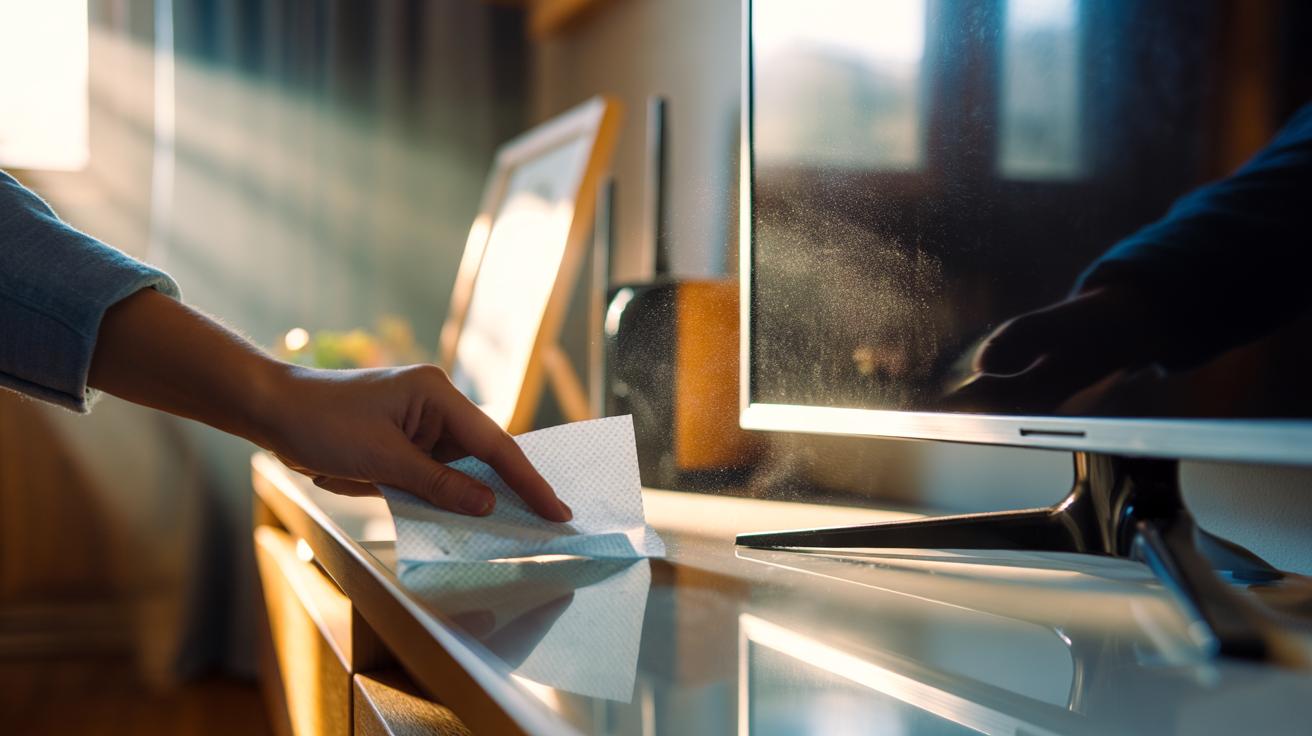
- ⏱️ 30-second method: Fold a fresh or used sheet and wipe hotspots—TV bezels, routers, blinds, skirting boards—with slow, steady passes to transfer the anti-static coating that lasts for days.
- 🧩 Best vs. avoid: Ideal for plastics, painted wood, laminates, and sealed metal casings; avoid touchscreens, raw wood, piano lacquer, and eyeglasses—choose unscented if sensitive.
- ♻️ Safety & sustainability: Keep away from food areas, wash hands, reuse sheets; alternatives include reusable anti-static cloths or microfibre lightly misted with diluted fabric softener.
- 🏠 Practical payoff: Reduces static, smooths micro-roughness, and slows dust buildup, delivering a visible clean between deep cleans with minimal effort.
Here’s the quick, slightly cheeky truth: a humble dryer sheet can stop dust in its tracks—and it doesn’t even need a tumble dryer to do it. In less than half a minute, you can swipe it over skirting boards, TV stands, blinds, and the top of that perpetually fuzzy router, and watch dust lose its grip. The secret isn’t magic. It’s chemistry and charge control. Dryer sheets reduce static electricity and leave a microscopically thin conditioning layer that makes dust less likely to cling. That’s why a 30-second wipe can keep surfaces looking freshly cleaned for days, not minutes, and why this trick has quietly become a go-to in British homes.
The Science Behind Dryer Sheet Dust Repellent
Dust is fussy, but predictable. It loves charged surfaces. Friction—think a cloth sliding over plastic or painted wood—builds static, turning shelves and screens into dust magnets. Dryer sheets fight back with cationic surfactants, often quaternary ammonium compounds, the same type used in fabric softeners. These positively charged molecules neutralise surface charge and reduce the electrostatic attraction that pulls dust from the air. Result: less cling, less buildup, less grief.
There’s a second layer to the trick. Dryer sheets deposit a whisper-thin conditioning film that’s slightly hydrophobic. It smooths micro-roughness on surfaces, cutting down the spots where fine particles can snag. Fewer “hooks” means fewer dust anchors and slower reaccumulation. Some sheets also carry lubricants and a trace of fragrance oils, which can help particles slide off instead of sticking. The effect is not permanent, but it’s surprisingly durable for such a quick pass. On lightly handled objects—photo frames, lamp bases, book spines—you may notice a visible difference for a week or more, even in busy, heating-on British winters.
How to Use a Dryer Sheet in 30 Seconds
Time it. You won’t need much longer than you’d spend waiting for the kettle to boil. Grab a fresh or gently used dryer sheet. Fold it once for grip. With gentle pressure, wipe along the grain of the surface—long, steady strokes for shelves, short flicks for switches and sockets (powered off, please). Focus on static-prone culprits: plastic TV bezels, the backs of monitors, router cases, blinds, picture frames, skirting boards, and the top edge of doors. Finish with a light pass on lamp shades and the outer case of fans or purifiers. Done. No sprays. No lint.
For stubborn dust, one slow pass is better than five fast ones. You’re aiming to transfer that anti-static coating, not whip dust into the air. If the sheet tears or feels draggy, refold to a clean side. Most standard sheets handle a small room’s hotspots in a single go. Store the used sheet in a clip or jar for tomorrow’s touch-ups; the anti-static benefit lingers, even after one round.
| Question | Quick Answer |
|---|---|
| Why it works | Anti-static agents neutralise charge; a thin film reduces particle grip. |
| Time needed | About 30 seconds per room hotspot circuit. |
| Best surfaces | Plastics, painted wood, laminates, sealed metal casings. |
| Avoid | Touchscreens, raw wood, piano lacquer, eyeglasses. |
| How long it lasts | Several days to a week, depending on traffic and airflow. |
Where It Shines—and Where It Doesn’t
Use dryer sheets on the spots that never stay clean: TV units, Wi‑Fi hubs, speaker grilles, window sills, ceiling fan blades, stair spindles, and the ridge behind radiators. Electronics casings benefit the most because the anti-static effect cuts the charge that typically drags in airborne fluff. On blinds—venetian or faux wood—the sheet glides between slats, leaving them slicker and less receptive to micro-dust. Painted skirting boards? A single pass stops that grey tide that seems to creep back after every vacuum.
There are limits. Don’t use dryer sheets directly on touchscreens, spectacles, or any optical coating; residues can smear and affect clarity. Skip raw timber and high-gloss piano finishes, where lubricants may streak. Precious antiques with open-grain finishes also fall under the “no thanks” column. If you’re sensitive to fragrance, choose unscented sheets. And in kitchens, do not rely on a dryer sheet to remove grease; clean first with a mild detergent, then apply the sheet to delay dust’s return. The rule of thumb: smooth, sealed, non-optical surfaces love it; delicate, porous, or precision-coated surfaces don’t.
Safety, Sustainability, and Alternatives
Modern dryer sheets are designed for fabrics, so the chemistry is gentle, but thoughtful use matters. Keep them away from pet bowls and food prep zones. If you have allergies, go fragrance-free and wash hands after use. The anti-static coating is minimal, yet still a coating, so avoid rubbing it into anything you breathe close to—like CPAP masks or camera lenses. For homes aiming to cut disposables, a single sheet can be repurposed for multiple sessions. Store it in a sealed container to retain effectiveness.
Concerned about waste? Consider reusable anti-static cloths or a microfibre cloth lightly misted with 1:10 fabric softener and water—sprayed onto the cloth, not the surface—for a similar effect. Anti-static screen-safe wipes exist for monitors and TVs when you need a manufacturer-approved option. In high-dust homes (open windows, pets, nearby construction), pair the dryer sheet routine with better filtration: replace HVAC or extractor filters regularly and vacuum with a HEPA tool. The best strategy blends a quick chemical edge with steady airflow control, keeping dust levels low rather than fighting them after the fact.
In a world where chores balloon and attention shrinks, the dryer sheet trick earns its place: minimal effort, visible payoff, and a dose of smart chemistry doing heavy lifting in the background. Neutralise static, smooth the surface, slow the dust—you’ve just hacked three problems at once. It won’t replace a deep clean, but it buys time and restores that just-polished look between proper sessions. The surprise is how long the calm lasts after a 30-second sweep. What surface in your home frustrates you most, and how will you test this anti-static shortcut there first?
Did you like it?4.6/5 (30)