In a nutshell
- 🧪 Vinegar’s acetic acid dissolves alkaline films without leaving soaps or polymers, delivering a residue-free clean on sealed hardwood (not for waxed, oiled, or unfinished boards).
- 🧹 Quick method: dry dust first, then mop with 1 tbsp : 1 L white vinegar solution using a microfibre pad, barely damp, along the grain; it evaporates fast, needs no rinse, and buffs to a satin glow.
- ⚙️ Keep it simple: distilled white vinegar, clean pads, and distilled water in hard‑water areas; spray the pad (not the floor), avoid pooling, and always spot test in an inconspicuous area.
- ⚠️ Red flags: cloudiness, patchiness, or persistent smears—stop and switch to a pH‑neutral wood floor cleaner; avoid vinegar on natural stone thresholds and moisture in board gaps.
- 🕒 Benefits: fast, thrifty, and effective—achieve a streak-free, residue-free shine in minutes with minimal moisture, ideal for routine refreshes in high‑traffic zones.
It sounds too good to be true: a bottle of white vinegar, a soft mop, and five minutes to a floor that gleams. Yet the chemistry stands up. Properly diluted, vinegar cuts through gritty films and everyday grime without leaving a sticky trace, giving hardwood a clean, crisp, residue-free finish. The trick is technique, not elbow grease. Use the right ratio, go light on moisture, and let a microfibre head do the lifting. Less is more with wood. This guide sets out why vinegar works, how to use it safely on sealed hardwood, and when to choose a different cleaner entirely. Your floor, your routine, no streaks.
Why Vinegar Leaves No Residue on Hardwood
Vinegar’s cleaning power comes from acetic acid—a weak acid that dissolves light alkaline films left by shoes, tap-water minerals, and general household dust. Unlike many detergents, it contains no surfactants or polymers that cling to the surface. Diluted properly, the solution wipes away and evaporates quickly, so there’s nothing to cure or buff off later. That’s why a vinegar wipe often feels “squeaky-clean” underfoot. The finish looks bright because there’s no leftover product dulling the gloss. For day‑to‑day footprints and smudges, this is ideal: a fast cycle that refreshes without adding build-up.
But hardwood is not bare wood. It’s usually protected by a polyurethane or aluminium‑oxide topcoat designed to keep spills out. Acid is safe at light dilutions and with a barely damp mop, yet repeated strong acids can wear a sheen faster. It won’t melt the finish, but it can subtly dull it over time if misused. That’s why professionals repeat two golden rules. First: dilute to a mild working solution. Second: never flood a timber floor. If your boards are waxed, oiled, or unfinished, skip vinegar completely and opt for a pH‑neutral cleaner formulated for those finishes.
Step-By-Step Method for an Effortless Floor Shine
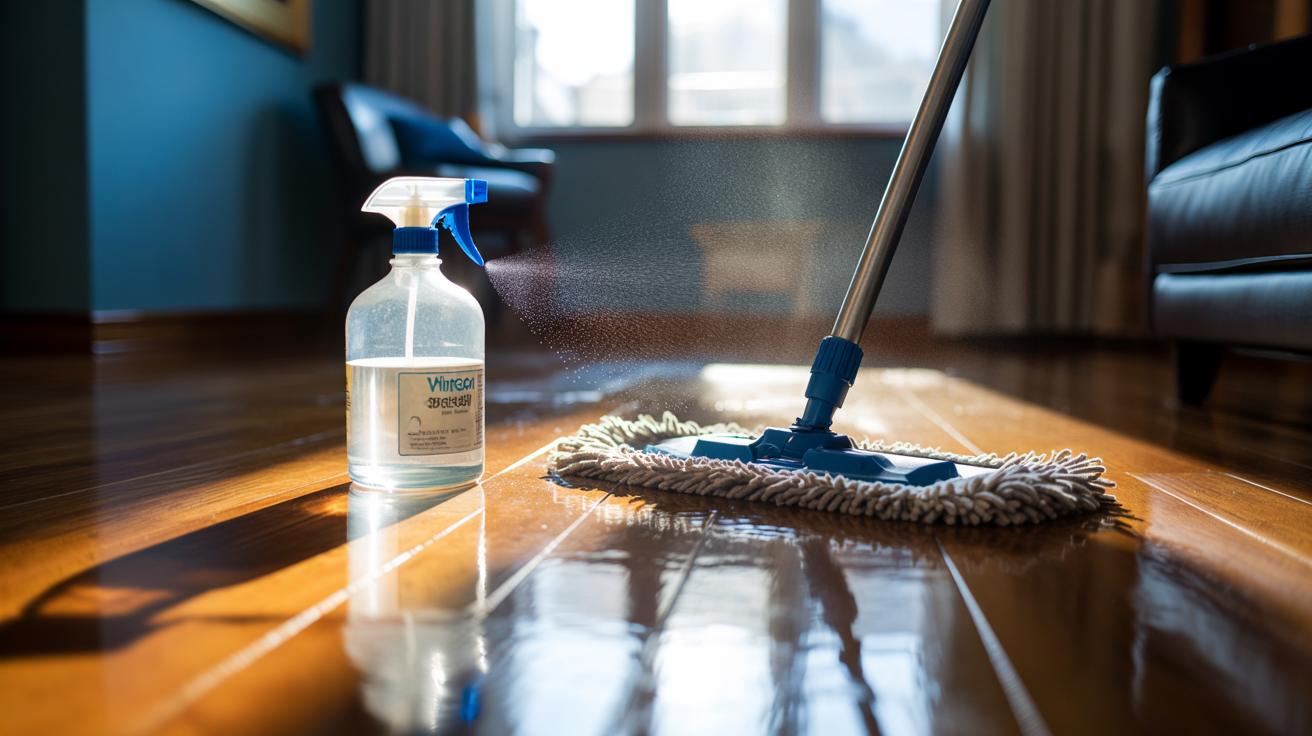
Start dry. Run a microfibre dust mop or vacuum with a hard‑floor head to pull up grit that can scratch under a wet pass. In a bucket or spray bottle, mix a mild solution: about 1 tablespoon (15 ml) white vinegar per 1 litre of warm water. That’s gentle, effective, and kind to most sealed finishes. Dip a flat microfibre mop, wring until just damp, and work in small sections. If you see beads of water, it’s too wet. Wipe along the grain. For scuffs near doorways, spray the solution directly onto the pad, not the floor.
The shine cue is speed. Because the mixture is light and volatile, it evaporates quickly, taking the film with it and leaving the surface crisp. Stubborn marks? Pause for ten seconds, then lift, don’t scour. Finally, a dry microfibre buff in high‑traffic lanes adds a quiet satin glow in seconds, no polishing compounds required. No rinse is needed when you’ve used the recommended dilution; the absence of soaps means there’s nothing to streak. Quick, tidy, done in minutes.
Dilutions, Tools, and When to Avoid
Choose simplicity. Distilled white vinegar, fresh water, a flat microfibre mop, and a well‑wrung pad are all you need. Hard water at home? Distilled or filtered water can reduce mineral hazing. Keep the mix mild for routine passes, and reserve stronger spot applications only for greasy splashes—then wipe immediately. Always test on a tucked‑away board before adopting any new routine. Below is a quick reference to help you tune your approach.
| Situation | Mix (Vinegar : Water) | Tool | Notes |
|---|---|---|---|
| Routine refresh (sealed hardwood) | 1 tbsp : 1 L (≈1:67) | Flat microfibre, damp | No rinse; quick evaporate, low odour |
| Greasy splash or heel mark | 1:10 in spray bottle | Spray pad, wipe immediately | Do not leave to dwell |
| High‑traffic weekly clean | 1/4 cup : 4 L (≈1:64) | Two-pass: damp then dry buff | Maintains residue-free sheen |
| Waxed, oiled, or unfinished wood | — | Specialist cleaner | Avoid vinegar; risk of dulling |
Red flags? If the finish turns patchy, smears persist, or you see cloudy areas after drying, stop. Switch to a pH‑neutral wood floor cleaner, which is engineered to match modern coatings. Avoid vinegar on natural stone thresholds and tiles nearby; acid can etch marble and limestone. And never saturate gaps between boards, where moisture can swell edges. Used sensibly, vinegar is a nimble, low‑cost option that keeps sealed hardwood crisp without film. Use a light dilution and a barely damp mop—and your floor will repay you with an effortless shine.
Used with care, white vinegar is a shrewd cleaner: fast to mix, cheap, and dependable for a streak-free, residue-free refresh on sealed hardwood. Keep the ratio light, the mop damp, and your eye on vulnerable finishes, and you’ll dodge the pitfalls that give acid cleaners a bad name. The result feels fresh underfoot, not tacky. It looks natural, not plastic. Simple, but effective. What’s your current floor routine, and where could a lighter, faster, vinegar-based pass save you time without sacrificing that just-cleaned shine?
Did you like it?4.4/5 (20)