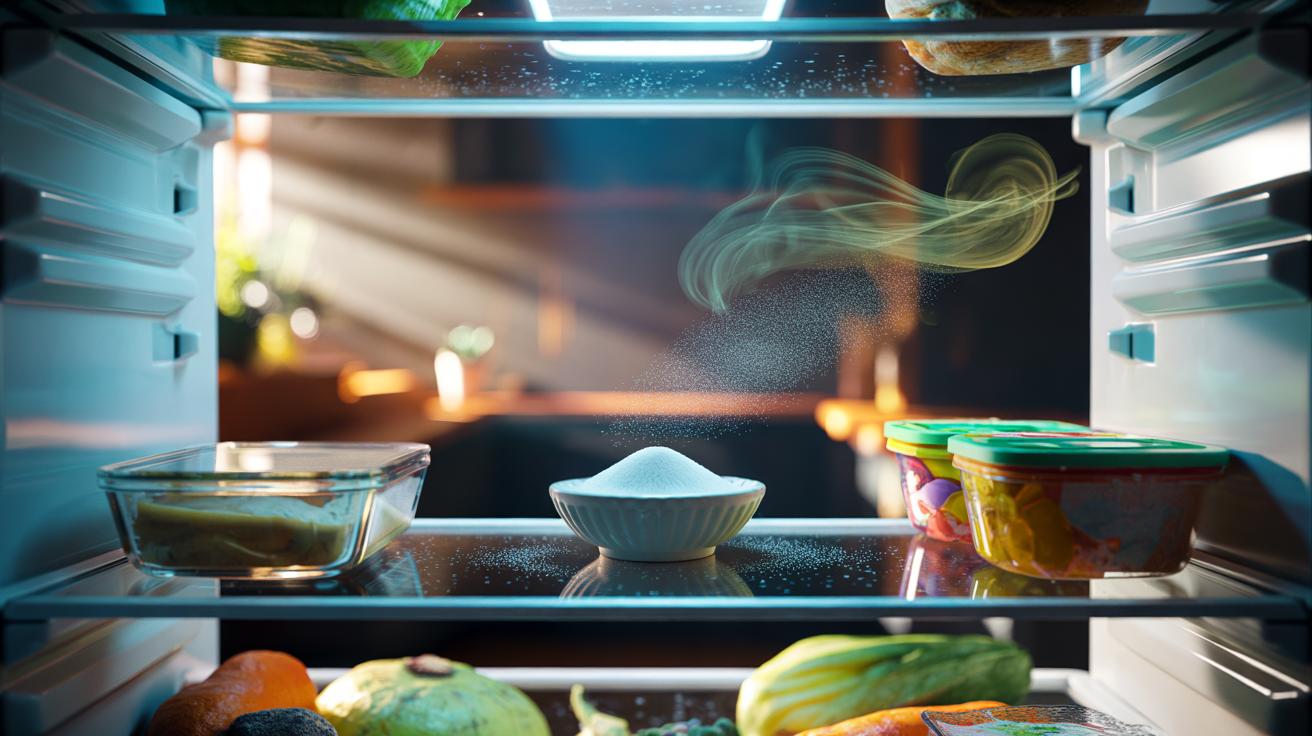
In a nutshell
- 🧪 Baking soda (sodium bicarbonate) neutralises acidic vapours like butyric acid and trimethylamine, turning them into non-volatile salts rather than masking smells.
- ⏱️ A 30-second reset: place a small plate of slightly damp baking soda near the odour source, gently fan the door, and do a quick wipe with a pinch of dry soda to blunt sharp smells fast.
- 🌬️ For ongoing defence, use a wide, open container with a thin layer (100–200 g) placed in areas with airflow; surface area matters more than quantity.
- 🔁 Maintain results by shaking weekly, replacing every 30–60 days, and using a mild soda paste for seals and shelves without leaving fragrances that taint food.
- ⚠️ Avoid common mistakes: don’t seal the soda, don’t hide it behind jars, skip scented deodorisers, and remember capacity—spread it thin, refresh often for best results.
You open the fridge. A sour note hits you before you’ve found the milk. Thankfully, the cure is as homely as it is powerful: bicarbonate of soda, also known as baking soda. This pantry staple doesn’t perfume the air; it neutralises the chemistry behind bad smells. Used smartly, it can calm a stubborn pong fast. In under 30 seconds, targeted use of baking soda can take the edge off the sharpest odours, buying you time to clean properly later. Here’s the science, the quick fix, and the longer game—so your fridge smells like food again, not last week’s leftovers.
Why Fridge Smells Stick — And How Baking Soda Neutralises Them
Fridge odours survive because they’re born of volatile molecules that stubbornly linger at low temperatures. Think butyric acid from soured dairy, trimethylamine from ageing fish, and sulphur notes from brassicas. Cold slows bacteria, but it doesn’t erase the chemistry. These molecules evaporate into the small, closed environment of the fridge, where plastics, seals, and porous foods absorb and release them like sponges. That’s why a spill on Tuesday can still whisper on Friday.
Enter sodium bicarbonate. Mildly alkaline and amphoteric, it reacts with many acidic vapours, converting them into non-volatile salts that don’t smell. Its fine particles provide generous surface area, so more molecules stick and react. Add a hint of moisture and you create a thin film that boosts contact, accelerating neutralisation. It doesn’t mask odour; it dismantles it. Importantly, bicarbonate is food-safe, fragrance-free, and cheap. That makes it ideal for a fridge ecosystem where you need efficacy without taint. Place it where air flows, and it quietly works on the background haze most of the day.
The 30-Second Reset: a Quick, Safe Deodorising Trick
When a sudden whiff hits—spilled kefir, a forgotten onion slice—use this fast reset. Crack open the door. Identify the hotspot. Sprinkle 1–2 teaspoons of baking soda onto a small plate or jar lid, then flick a few drops of warm water to form a barely damp film. Slide the plate onto the shelf nearest the smell and fan the door gently for ten seconds to waft air over the soda. Now, swipe the affected spot with a cloth dabbed in a pinch of dry soda—quick, light, no soaking. In half a minute you’ve removed the sting, not just covered it up. Finish the wipe-down properly later when you have time; this is triage, not surgery.
| Action | Amount | Time | Best For |
|---|---|---|---|
| Plate of dampened baking soda | 1–2 tsp | 20–30 sec | Sharp, recent odours |
| Quick wipe with dry soda | Pinch on cloth | 10–15 sec | Spots and spills |
| Leave plate in place | 1 tbsp | 1–2 hrs | Residual background odour |
Longer-Term Odour Defence: Placement, Quantity, and Replacement
For day-to-day freshness, treat bicarbonate like a silent air filter. Use 100–200 g of baking soda in a wide, open container to maximise exposed surface. Tuck it on the middle shelf, slightly towards the back where airflow is steadier. For big fridges or shared houses, add a second open cup to the salad drawer, which traps earthy, sulphurous notes from greens. Surface area matters more than the sheer amount. A thin layer works better than a deep jarful with a tiny opening.
Shake the container weekly to break up crusting and refresh the surface. Replace every 30–60 days, sooner after strong incidents—fish spills, ripe cheeses, garlicky leftovers. For cleaning, make a quick paste (three parts soda to one part water) and spread lightly on seals and shelves; wipe after two minutes. It’s gentle on plastics and glass, kinder than scouring creams, and won’t leave a perfume that migrates into food. Avoid saturating cardboard packaging nearby, which can wick moisture and hold odours you’re trying to remove.
Smart Upgrades and Common Mistakes
Boost performance with simple tweaks. Store a dedicated box of “fridge-only” bicarbonate so it never inherits kitchen odours from baking or cupboards. Pair soda with good housekeeping: cover leftovers, drain produce, and clean spills immediately so there’s less to neutralise. If you’ve hosted a curry or unwrapped a ripe Stilton, let the fridge run with an open plate of slightly damp soda overnight for a deeper reset. Location is strategy: near air vents beats a forgotten corner.
Avoid frequent missteps. Don’t keep soda in a sealed jar; it can’t interact with air. Don’t bury the open container behind jam jars where airflow is blocked. Skip scented “deodorisers” alongside soda—layering fragrances creates a muddle and can taint butter or eggs. Baking soda is mildly abrasive, so test on glossy acrylic trims before scrubbing with zeal. And remember capacity: one tiny capful won’t handle a major stink. Think breadth, not depth—spread it thin, refresh often, and let chemistry do the heavy lifting.
In a world of complicated cleaning hacks, bicarbonate of soda remains the modest champion of the cold cupboard. It’s safe, odourless, and ruthlessly effective when given air and a little moisture. From the 30-second rescue to the monthly refresh, it neutralises the problem at its source, keeping flavours true and shelves honest. Your nose can tell when the chemistry is working. Ready to reclaim that fresh, nothing-much-to-smell fridge—and which quick tactic will you try first when the next whiff ambushes your breakfast plans?
Did you like it?4.6/5 (30)