In a nutshell
- 🥜 The walnut’s natural oils penetrate wood fibres to blend light scratches, adding a subtle tint on darker timbers for a fast, low-tech refresh.
- 🧰 Step-by-step: clean dust, use a fresh kernel to rub along the grain, pause, then buff; repeat once or twice and keep heat or moisture off the spot for a few hours.
- 🎯 Best for oil-finished, matte, mid-to-dark woods (walnut, mahogany, aged oak); not for deep gouges, thick polyurethane topcoats, or laminate surfaces.
- 🧴 For broader restoration, apply paste wax as a protective layer; on pale woods use clear furniture oil or colour-matched crayons; high-gloss finishes often need scuff-sand and recoat.
- ⚠️ Test first on a hidden area, avoid silicone-laden cleaners, apply sparingly to prevent dullness, and consider nut allergies; a light wax top-off can help lock in the improvement.
Home restoration doesn’t always demand sanders, solvents, or a call-out fee. Sometimes, it’s a bowl of mixed nuts. The humble walnut, cracked and pressed into service, can soften the look of scuffs and shallow scratches on wooden surfaces in minutes. That’s not folk magic; it’s chemistry working with craft. Its natural oils seep into tired timber, mellowing harsh edges and reviving colour without the gloss of a full refinish. Used correctly, this pocket-sized remedy can make a coffee table look newly loved rather than long-suffering. Here’s how the nut’s properties deliver quick wins, when to use the trick, and when to opt for something more robust.
Why a Walnut Works on Wood
Walnuts are naturally rich in oleic and linoleic acids, the kinds of oils that penetrate dry wood fibres and reduce the harsh contrast that makes a scratch conspicuous. As you rub the kernel across the mark, gentle friction warms the surface, helping the oil flow into the abrasion. That tiny dose of heat acts like a catalyst, distributing pigment and sheen more evenly. The effect is subtle yet immediate: the pale line shrinks back, the eye stops catching on the flaw, and the surface appears calmer.
There’s also a slight tinting effect. Crushed walnut meat contains brownish compounds that behave like a whisper-thin stain, softening high-contrast light scratches on darker timbers such as walnut, mahogany, and aged oak. It won’t fill a gouge. It won’t flatten a dent. But it will blur shallow abrasions that haven’t severed the grain. Think of it as a precision touch-up rather than a makeover. On sealed woods with a tired wax or oil finish, the nut’s oils mingle with existing protection to refresh the surface without adding a hard, plasticky film.
Step-by-Step: Erasing Scratches Safely
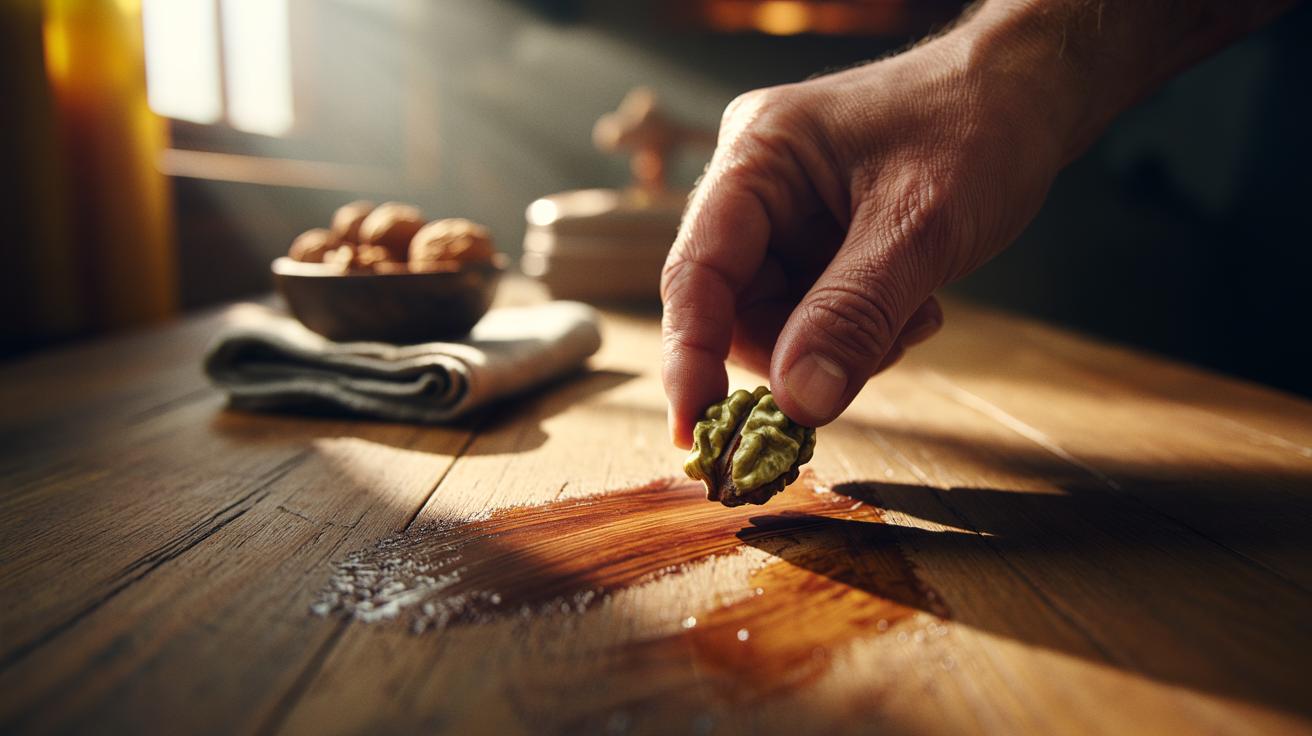
Start by wiping the wood clean with a soft, dry cloth. Dust acts like grit; remove it first. Crack a fresh walnut and use the meat, not the shell. Rub lightly along the scratch, following the grain, with small overlapping passes. Pause for a minute to let the oil settle. Buff with a lint-free cloth. If the mark persists, repeat once or twice. Gentle, patient pressure beats aggressive scrubbing every time.
If you’re dealing with a polyurethane-heavy, high-gloss finish, test in a discreet corner: the oil may sit on top rather than penetrate. Ditto for pale, open-grain woods such as ash or maple—the tint could darken the area slightly. For large surfaces, work in sections to maintain an even sheen. After treatment, avoid placing hot mugs or damp glasses on the spot for a few hours while the oil migrates and stabilises.
| Scratch Type | What to Do | Expected Result |
|---|---|---|
| Light surface scuff | Single walnut rub, quick buff | Immediate softening of visibility |
| Shallow scratch with pale line | Two passes, 1–2 minutes apart | Noticeable blending with surrounding colour |
| Deep gouge or dent | Steam/wood filler; then finish | Walnut alone not sufficient |
When to Use Oil Versus Wax or Varnish
A walnut is a fast fix. It excels when you want discretion and speed, not a total refinishing job. Choose it for hand-rubbed or oil-finished furniture, matte sheens, and mid-to-dark tones. The nut’s oils complement these finishes, topping up what’s already there. If the surface looks dry rather than damaged, a walnut rub can act like a miniature rejuvenation service.
For persistent wear, turn to wax. A quality paste wax, applied thinly and buffed, can mask micro-scratches while adding slip and protection. It builds a sacrificial layer that a walnut cannot. Varnish, lacquer, or polyurethane demand a different approach: scuff-sand and recoat the local area, or refinish fully for uniform gloss and durability. On light-coloured wood where any darkening is unwelcome, consider a clear furniture oil or colour-matched repair crayon instead of a walnut. And if a table lives under daily sunlight, remember that UV fade can make scratches seem lighter; oils will help, but colour correction might require a compatible stain.
Quick Tips, Caveats, and Care
Always test on the underside or back edge first. If the spot turns patchy or stays slick, the finish is likely too sealed for penetration. Cleaners matter: silicone-laden sprays can create a barrier that keeps the oil from settling. Wipe with a damp cloth and dry thoroughly before you begin. A little oil goes a long way; over-application invites dust and dullness.
Mind the material. Engineered floors with thick polyurethane topcoats won’t accept the treatment; neither will high-pressure laminates posing as timber. Solid wood and veneered pieces with oil or wax finishes are your ideal candidates. After the walnut rub, buff briskly to align the sheen with its surroundings, then wait. If the improvement fades after a week, repeat and finish with a light coat of paste wax to lock in the effect. Store a few shelled walnuts in an airtight jar for consistent results—freshness keeps oils potent. Safety note: if nut allergies are a concern in your household, opt for a commercial, nut-free furniture oil instead.
The walnut trick doesn’t replace craftsmanship; it complements it. It’s fast, frugal, and oddly satisfying, a reminder that small, precise interventions often beat heavy-handed fixes. With a minute’s work, scuffs soften, corners feel less tired, and the whole room lifts. Used with care, the method preserves patina while deflecting attention from small mistakes of daily life. Will you try the walnut on your next bothersome scratch, or do you have a favourite low-tech remedy you trust to restore wood without reaching for a sander?
Did you like it?4.5/5 (26)