In a nutshell
- 🧅 The onion’s natural enzymes and reactive sulphur compounds (alliinase → sulfenic acids, thiosulfinates) neutralise musty VOCs, add mild antimicrobial pressure, and adsorb odours for a rapid reset in confined wardrobes.
- ⏱️ Method: place half an onion cut-side up on a saucer for 3–8 hours in a closed wardrobe, then ventilate 10–20 minutes; optional dish of bicarbonate of soda helps mop up residual notes—avoid direct contact with wood or fabrics.
- 🧥 Results: sharp amine and stale aldehyde notes dull noticeably, microbial mustiness drops, and clothes return to a neutral baseline—not a cover-up with perfume.
- 🛠️ Limits & cautions: onion won’t fix leaks, damp, or embedded mould—source control is essential; consider dehumidifying, keep away from pets, and shorten cycles if sensitive; smoke/perfume saturation may need washing or outdoor airing.
- 💷 Why it’s worth it: a fast, frugal, and textile‑friendly tactic for weekday freshness; ideal for quick turnarounds and gentle on wool, cotton, and blends.
Open your wardrobe and a cloud of stale air hits you. It’s the unmistakable smell of shut drawers, damp fibres, and time. Here’s the unlikely fix: a fresh slice of onion. It sounds like a folk trick, yet it works astonishingly fast because natural enzymes and reactive sulphur compounds inside the onion set to work the moment the knife bites. In a matter of hours, they tangle with musty molecules and make them vanish or mellow. The result: a fresher cupboard without aerosols, perfumes, or scrubbing. Below, we unpack the science, the method, and the limits—so you can rescue wool, linen, and even old coats before your next outing.
Why an Onion Works So Quickly
Cut an onion and you activate an internal chemistry set. The enzyme alliinase reacts with sulphur-containing precursors to release a mix of sulfenic acids, the tear-inducing syn-propanethial-S-oxide, and downstream thiosulfinates. These highly reactive species don’t just smell; they also interact with the volatile organic compounds (VOCs) responsible for stale, mushroomy, or locker-like odours. Think amines from ageing sweat, aldehydes from oxidised fibres, and faint microbial notes from dormant mould. The onion’s cocktail either binds, oxidises, or outcompetes them, shifting the overall scent profile fast.
Speed matters in a small space. A wardrobe concentrates both the onion’s reactive plume and the malodours clinging to fabric. There’s a second front, too: onion tissue is mildly antimicrobial, discouraging the microbes that manufacture mustiness. Leave a fresh slice inside for 4–8 hours and most people notice a clear improvement. Crucially, the onion odour itself dissipates quickly when you ventilate. What’s left is a neutral baseline rather than a perfumed cover-up, which makes clothes smell genuinely clean—not just masked.
How to Deploy the Slice, Step by Step
Start clean. Remove obvious damp sources: wet umbrellas, un-dried gym kit, leaky shoe polish. Then follow this quick set-up for a fast deodorising cycle that’s gentle on textiles and furniture.
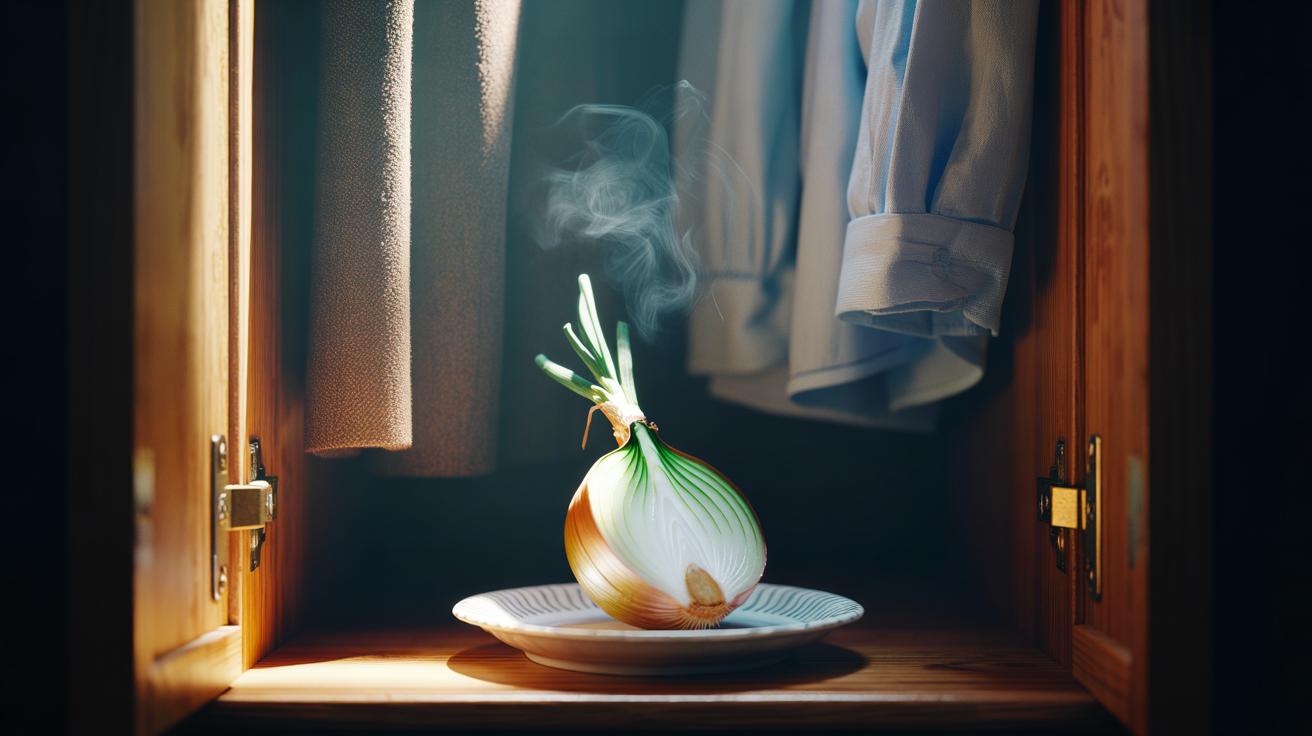
Slice a fresh onion in half. Place one half, cut-side up, on a small saucer or jar lid to keep juice off wood or fabric. Tuck it on a shelf or the wardrobe floor with good air circulation around it. Shut the doors. The confined volume helps the reactive sulphur compounds spread through fibres and meet the stubborn odours you’re trying to evict.
Timing is key. For a lightly musty cupboard, 3–4 hours is sufficient. For entrenched smells, extend to 6–8 hours, then remove the onion. Next, open the doors wide and ventilate for 10–20 minutes. If you’re sensitive to onion, add a small dish of bicarbonate of soda during the airing phase; it mops up residual notes. Do not place the onion directly on wood or textiles. Use a saucer, and avoid prolonged contact beyond eight hours to reduce moisture exposure. Rotate garments afterwards to ensure even airing and restore natural drape.
Chemistry and Microbes: The Odour-Neutralising Mechanism
The onion’s deodorising effect is a synergistic triad: chemical reaction, adsorption, and antimicrobial action. First comes reaction. Thiosulfinates and related sulphur species can convert smelly amines into less volatile forms and nudge aldehydes towards less pungent oxidised products. Second, raw onion tissue is a wet, cellular matrix—ideal for grabbing trace VOCs by simple adsorption. Third, several onion-derived compounds discourage the microflora that create earthy, mushroom-like notes in shut wardrobes. The combined effect is fast, noticeable, and surprisingly thorough for a zero-cost remedy.
Here’s a quick look at what’s happening in practice.
| Odour Source | Onion Action | Time to Notice | Notes |
|---|---|---|---|
| Amines (sweat residues) | Thiosulfinates react and compete, dulling sharpness | 2–4 hours | Best in closed wardrobe volume |
| Aldehydes (oxidised fibres) | Mild oxidation/neutralisation, scent profile shifts | 4–6 hours | Ventilation completes the reset |
| Microbial mustiness | Antimicrobial pressure reduces VOC production | 6–8 hours | Treat moisture sources for lasting results |
| General stale air | Adsorption + displacement by onion volatiles | 3–5 hours | Air out after removal |
Importantly, this isn’t perfumery. The goal isn’t cover-up; it’s subtraction. When you air the wardrobe after the cycle, the onion notes lift with the circulating air, leaving a clean slate that highlights the natural smell of your fabrics—wool like wool, cotton like cotton.
Evidence, Limits, and When Not to Use It
Plenty of lab literature supports onions’ reactive sulphur chemistry and antimicrobial behaviour, and home trials consistently show a tangible deodorising effect in small spaces. Yet there are limits. If your wardrobe is truly damp, if there’s a hidden roof leak, or if mould has colonised the back panel, the onion is a quick fix—not a cure. Source control beats symptom control every time. Dry the space, remedy leaks, and consider passive dehumidifiers for basements and box rooms.
Sensitivities matter. Some people are more responsive to onion volatiles; if that’s you, use shorter cycles and thorough airing. Keep onions out of reach of pets and away from varnished wood without a protective dish. For smoke-saturated or perfume-heavy garments, expect partial success only; those molecules are stubbornly lipophilic. In that case, follow with a gentle wash, a day of outdoor airing, or a professional ozone-free treatment. The onion trick shines as triage: after a weekend away, before a big meeting, during a cold snap when windows stay shut. It’s fast, frugal, and kinder to textiles than harsh sprays.
There’s something cheering about a remedy that costs pennies and works within hours. A humble onion, a saucer, and a closed door can re-set a tired wardrobe while you sleep or work from home. You’ll still need to manage moisture and rotate garments, but the method buys time and restores calm to your morning routine. Ready to experiment? Slice, place, wait, then air—and evaluate the difference on your favourite jumper. What other low-tech, natural tricks have you tried to keep closets fresh without drowning them in fragrance?
Did you like it?4.4/5 (25)