In a nutshell
- 🧂 Salt’s science: relies on hygroscopic absorption, capillary action, and crystallisation to pull moisture and pigments out of carpet fibres overnight.
- 🧽 How-to: blot first, apply a 3–5 mm salt layer, optionally mist with cool water or use club soda/white vinegar, leave overnight, then vacuum and groom.
- 🚫 When not to use: avoid on delicate natural fibres (sisal, jute, silk blends) and heavy grease or paint; for set-in stains, choose enzymatic or oxidising treatments.
- 🐶 Targeted tweaks: cornstarch before salt for light oils; salt after blotting pet accidents, then follow with an enzyme cleaner to neutralise odour.
- ✅ Benefits and routine: cheap, low-risk first aid that reduces wicking; repeat once if needed, then protect high-traffic lanes with a carpet protector and regular grooming.
It sounds like a miracle hack: sprinkle a pantry staple, go to bed, wake up to a cleaner floor. Yet the overnight salt method isn’t magic; it’s clever physics meeting everyday stains. Salt is cheap, inert, and widely available, which makes it a compelling first response when spills hit the fibres. Used correctly, it can draw out fresh liquids, tame tough dyes, and buy you time until a deeper clean. That’s the secret—letting salt work slowly while you sleep. Below, you’ll find the science behind the method, step-by-step instructions, and the cases where salt shines or should be set aside. Your carpets could look livelier by morning.
Why Salt Works on Carpet Stains Overnight
Salt’s power lies in three forces: hygroscopic absorption, capillary lift, and crystallisation. As a hygroscopic compound, it draws moisture from its surroundings and pulls liquid out of the pile. That moisture doesn’t vanish; it migrates into the salt bed, distancing the spill from delicate fibres. At the same time, tiny spaces between grains encourage capillary action, wicking tinted liquids—like wine—towards the surface crust. Left undisturbed, the salt bed becomes a temporary sponge and a colour magnet. Overnight is ideal because evaporation slows, and the pull continues.
There’s chemistry too. Many household stains carry charged particles; salt’s ionic lattice can disrupt weak bonds, helping loosen pigments. As salt dries, it forms crystals that entrap residue, making it easier to vacuum away. The method is notably effective on fresh, water-based spills, mild tannins, and the lingering dampness from pet accidents after blotting. It’s not a solvent for grease, nor a bleach. But for emergency triage and colour lift, it’s a quiet workhorse. Success hinges on speed, coverage, and patience—apply promptly, spread generously, and let time do the heavy lifting.
Step-by-Step: The Overnight Salt Method
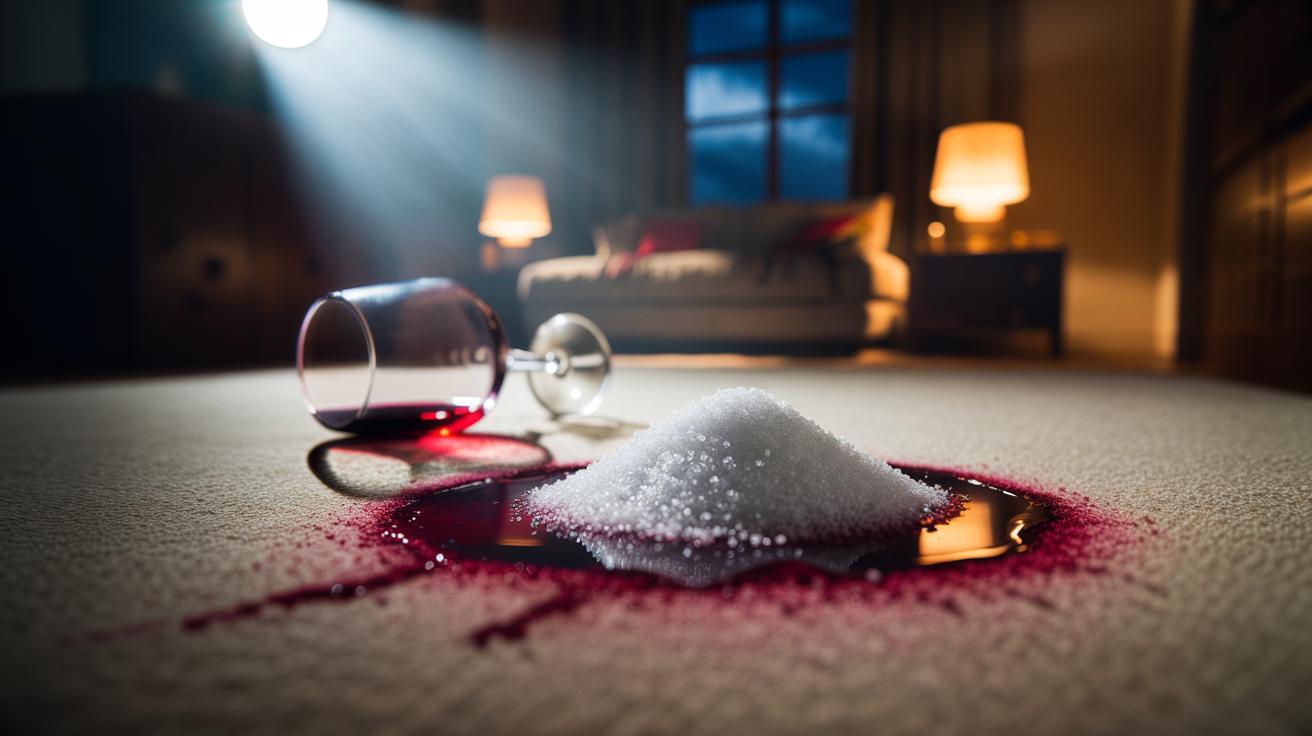
Act fast. First, blot the spill with white cloth or kitchen roll, working from the edge inward. Don’t rub. While the area is still slightly damp, mound a 3–5 mm layer of plain white table or kosher salt across and just beyond the stain. For dyed liquids, lightly mist with cool water to activate capillary pull; for red wine, a splash of club soda beneath the salt can help lift pigments. Leave the mound untouched overnight. In the morning, break the crust, vacuum thoroughly, then groom the pile. If a shadow remains, repeat once rather than scrubbing.
For specific stains, small tweaks boost results. A teaspoon of white vinegar in 250 ml water under the salt helps with tannins. A dusting of cornstarch before salting can tame mild grease, though heavy oils need a different route. Always patch-test on an inconspicuous spot.
| Stain Type | Salt Pairing | Notes |
|---|---|---|
| Red wine, juice, tea | Salt + club soda or mild vinegar solution | Apply while fresh; avoid hot water on wool. |
| Muddy water, rain marks | Salt only | Blot first; generous coverage aids wicking. |
| Pet accidents (dampness) | Salt after blotting | Follow with enzyme cleaner for odour. |
| Makeup, light grease | Cornstarch, then salt | For heavy oils, use solvent-based spotter. |
When to Use Salt, and When Not to
Use salt when the spill is fresh, water-based, and has not sunk deep into the backing. It’s excellent as a stabilising first aid for colourful liquids and for drying out patches that might otherwise wick back overnight. Salt is also safe on most synthetic carpets and many wool blends if you’re gentle. If the stain is still damp, salt can intercept it before it sets. That’s the win. It’s also handy when you can’t immediately access a dedicated cleaner, or you want to avoid over-wetting in flats where drying is slow.
Avoid salt on delicate natural fibres like sisal, jute, and some silk blends; crystals can abrade, and moisture can distort the weave. Skip it for heavy grease, tar, or paint—choose a solvent spotter instead. For old, set-in stains, salt won’t undo chemical bonding; consider an oxidising or enzymatic product depending on whether the culprit is dye-, protein-, or oil-based. Always perform a colourfast test: press a damp white cloth on the carpet for 30 seconds. If dye transfers, proceed cautiously. And remember: salt is a first response, not a full restoration plan. Persistent marks may need professional hot-water extraction.
Done well, the overnight salt method is quiet, low-risk, and surprisingly effective. You’ll wake to a brittle crust that vacuums away with the colour it captured, leaving fibres brighter and less sticky to the touch. Build a simple routine: blot, salt, sleep, vacuum. Then, finish with targeted care—an enzyme for pet residues, a protector spray in high-traffic lanes, and weekly grooming to keep fibres upright. The goal is to reduce wicking and set-in discoloration with minimal moisture. Will you try salt tonight and see what the morning reveals, or will you tailor the approach to the stains your home battles most often?
Did you like it?4.5/5 (28)