In a nutshell
- 🧪 The chemistry: sodium chloride plus a weak acid (vinegar or lemon) disrupts iron oxide, forming soluble iron salts; timing is crucial to lift rust without pitting steel.
- 🕰️ The overnight method: create an overnight brine, soak 6–12 hours, scrub, do a bicarbonate rinse, then dry thoroughly and apply light oil to protect.
- 🛠️ Variations: use a salt + lemon paste for edges, a potato + salt rub for light bloom (thanks to oxalic acid), and avoid brine on plated or galvanised parts.
- 📊 Quick reference: a table outlines methods, times, best uses, and risk notes; start mild, inspect often, and stop at the first sign of etching.
- 🧴 Prevention: clean and dry after use, wipe with camellia oil or use an oiled sand bucket, hang tools for airflow, and sharpen after de-rusting.
Britain’s sheds hide a quiet scandal: good tools dulled by brown bloom after one damp night. The remedy is sitting in most kitchens. Ordinary sodium chloride — table salt — teams with a mild acid to unpick rust while you sleep, giving chisels, spades, and secateurs a morning-after revival. It’s thrifty, low-fuss, and surprisingly scientific. Used correctly, a salted soak nibbles at corrosion without biting too deeply into sound steel. Here’s how the chemistry works, why timing matters, and the practical steps to turn a flaky trowel into a serviceable companion by breakfast. No fancy kit. No harsh solvents. Just a method that respects metal and suits a drizzly UK evening.
Why Salt Helps Dismantle Rust Overnight
Rust is iron oxide. Tough, flaky, and stubborn. Chloride ions from salt are small, mobile, and opportunistic; they insinuate themselves into the oxide’s lattice, loosening bonds that hold the crust together. Add a weak acid — white vinegar (acetic acid) or lemon juice (citric acid) — and you create a mildly acidic brine that accelerates ion exchange. The result is controlled dissolution, converting stuck-on oxides into soluble iron salts that scrub away in the morning. The trick is balance: enough activity to lift corrosion, not enough to pit good steel.
Left alone, salt water can promote new corrosion; paired with acid and a timed soak, it becomes a targeted tool. The brine creeps into crevices where brushes fail, especially along rivets and serrations on pruning blades. Do not confuse this with aggressive pickling. We’re in the realm of kitchen chemistry, slow but effective, suited to carbon steel garden tools. Stainless benefits too, though passivation layers mean progress is slower. Always stop the reaction once the rust softens, rinse thoroughly, and dry completely to prevent renewed attack.
Step-By-Step: The Overnight Brine Method
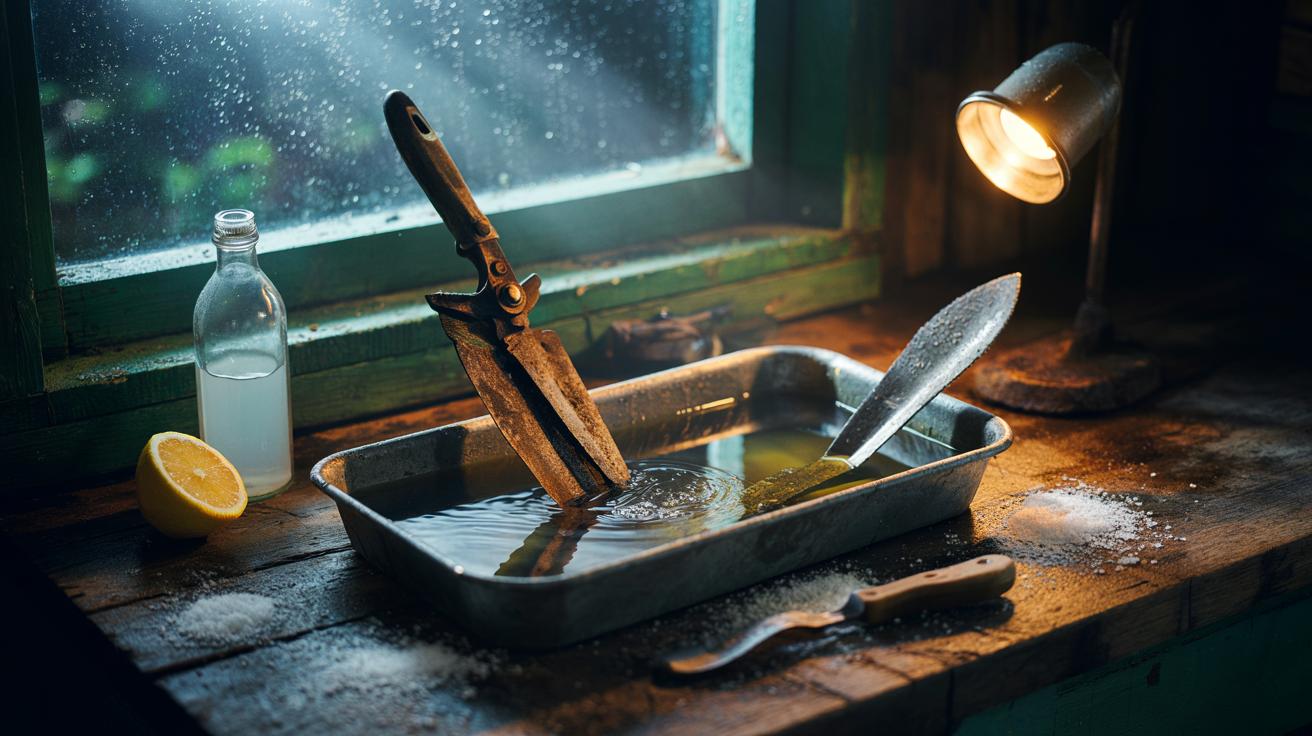
1) Mix a bath: 250 ml white vinegar with 1–2 tablespoons of table salt per tool. Stir until crystals dissolve. For chunky spades, make enough to cover the rusted area in a tray; for secateurs or trowels, a jar or washing-up bowl is fine. Label the container and keep it away from children and pets.
2) Degrease first. A quick wash with hot water and a drop of washing-up liquid lifts soil and sap that block the brine. Dry with a rag.
3) Submerge rusty sections or wrap them in a cloth soaked with the brine. Leave 6–12 hours. Overnight suits light-to-moderate rust. Check at 4 hours if blades are thin; you’re aiming for softened, darkened oxide, not etched steel.
4) Scrub at dawn. Use a stiff nylon brush, wire brush, or crumpled aluminium foil to lift the loosened oxides. Rinse with hot water. To halt lingering acidity, splash on a bicarbonate of soda rinse (1 teaspoon per cup of water), then rinse again. Dry immediately and thoroughly — heat from a hairdryer or a few minutes in sunshine helps.
5) Protect. Wipe on a thin film of light oil (camellia, sewing-machine, or 3‑in‑1). For wooden handles, add a breath of boiled linseed oil. Store off the shed floor. The whole dance takes minutes of hands-on time and rescues seasons of neglect.
Enhancers and Variations: Lemon, Potato, and Oxalic Touch
For blades you can’t soak, the paste route shines. Sprinkle salt directly onto the rust, then squeeze on lemon juice to make a gritty slurry. Leave 30–60 minutes, scrub, and repeat overnight in short sessions for stubborn patches. The salt crystals act as a mild abrasive while the citric acid chelates iron, freeing it without gouging. This is gentle enough for secateurs with fine bevels if you watch the time.
The potato trick is a favourite on UK allotments. Halve a potato, dip the cut face in salt, and rub. Potatoes contain oxalic acid, which teams with salt to shift light rust on hoes and trowels. It’s tidy for spot treatment on rivets or serrations. For heavy orchard rust, a measured citric or oxalic acid bath (following manufacturer limits) speeds results, but respect PPE and exposure times. Avoid brine-acid mixes on plated or galvanised parts; you risk lifting protective layers. Never combine acids with bleach, and ventilate your workspace. A touch of patience beats brute force, preserving temper and edge geometry.
At-a-Glance Guide: Times, Tools, and Risks
Choosing the right variation saves steel and sleep. Use this quick reference to match rust level to method and manage the clock.
| Method | Mix/Setup | Typical Time | Best For | Risk Notes |
|---|---|---|---|---|
| Salt + Vinegar Brine | 1–2 tbsp salt in 250 ml white vinegar | 6–12 hours (overnight) | Trowels, spades, pruners with moderate rust | Check early to avoid pitting on thin blades |
| Salt + Lemon Paste | Salt sprinkled, lemon juice to slurry | 30–120 minutes per pass | Edges, serrations, small patches | Low risk; repeat rather than overlong soaks |
| Potato + Salt Rub | Halved potato dipped in salt | 10–30 minutes | Light surface bloom, rivets | Gentle; may need follow-up oiling |
| Salted Water Only | 1 tbsp salt in 500 ml water | Not recommended alone | Emergency wipe-down | Can promote new rust without acid and drying |
When in doubt, start mild, go short, and inspect often. The goal is rescuing metal, not winning a chemistry race.
Care, Storage, and Preventing Relapse
Treat the salt trick as a reset, then change the shed habits that caused the bloom. After each job, knock off soil, rinse, and dry. A quick wipe with camellia oil or a silicone cloth blocks moisture. Some gardeners keep a bucket of kiln-dried sand mixed with a splash of oil: plunge and twist blades to clean and coat in one motion. Hang tools, don’t floor-lean; damp rises in British sheds, and concrete sweats in spring.
Silica gel sachets in drawers help; so does airflow. Avoid soaking composite handles or varnished ferrules in brine, and keep acids away from aluminium components. Sharpen after de-rusting, not before, so you’re grinding clean steel. If you strike flaking rust that reveals pitting, accept it and polish the edges; strength lives at the edge and spine, not in cosmetic shine. With a light weekly ritual, you’ll seldom need another overnight rescue.
By dawn, what looked like scrap often feels dependable again: edges free, joints smooth, surfaces honest rather than orange. The combination of sodium chloride and a kitchen acid is cheap, quick, and oddly satisfying, giving garden tools a second lease without harsh chemicals or specialist gear. The key is timing, rinsing, and oiling. As the weather swings wet-dry across the UK, this little bit of chemistry can become your quiet ally in the shed. Which tool in your collection most deserves an overnight salt fix tonight, and what else might you revitalise while you’re at it?
Did you like it?4.6/5 (25)