In a nutshell
- 🔇 Talcum powder stops squeaks fast by acting as a dry lubricant and helping adsorb surface moisture, taming stick–slip friction between boards and subfloor.
- 🧰 Locate the squeak, vacuum gaps, sprinkle talc along seams, work it in with a brush/card, walk the area, then reapply lightly if needed; wipe residue for a tidy finish.
- 🧭 Best for light-to-moderate squeaks and seasonal movement; if there’s visible floor movement or loose subflooring, use mechanical fixes (screws, shims) instead of relying on powder.
- ⚠️ Choose asbestos‑free talc, avoid inhalation, and clean to prevent a slippery surface; alternatives include cornstarch, bicarbonate of soda, or graphite in specific cases.
- 💷 Quick, cheap, reversible, and gentle on finishes—ideal for UK humidity swings; top up after damp spells and add felt pads or a dehumidifier to prolong the quiet.
Squeaky floorboards. They needle the nerves at dawn, embarrass the host after dinner, and give away late-night fridge raids. The good news is simple and surprising: a humble dusting of talcum powder can hush the racket almost instantly. It’s not magic. It’s physics. Talc tampers both with moisture at the surface and the friction that causes boards to chirp. Sprinkle, sweep it into the seams, walk, and listen. Often, the noise vanishes in seconds. It’s cheap, reversible, and gentle on timber. For UK homes where seasons swing from soggy to dry, it’s an elegant first response before breaking out screws, shims, or contractors.
How Talcum Powder Quiets a Squeaky Floor
Most squeaky floors aren’t structural failures. They’re tiny dramas of stick–slip friction between the floorboard, subfloor, and fasteners. Moist air swells wood; dry air shrinks it. As the board flexes, edges grab, release, and sing. Talcum powder interrupts that cycle in two ways. First, talc particles are plate-like and very smooth, acting as a dry lubricant that lets mating surfaces slide quietly instead of grating. Second, while not a sponge, talc can adsorb trace surface dampness, cutting the tackiness that makes wood fibres cling.
In many homes, a quick dust of talc into the joints is enough to stop the noise immediately. Because it’s dry, it won’t swell wood or soften finishes the way oils can. The powder migrates into micro-gaps, cushioning the sheer points where nails rub or tongues meet grooves. On engineered boards it’s equally effective, damping friction at the veneer edges and underlayment interfaces. The effect can feel disproportionate: a scant teaspoon, spread well, silences a whole corridor.
There is an additional bonus: talc is inert and stable. It won’t gum up with time as some sprays do. Capillary dampness on humid days loses its grip when talc lies between fibres, so those seasonal squeaks that plague British winters and summers alike are softened. You don’t have to lift a single board.
Step-by-Step: Apply Talc for Fast, Clean Results
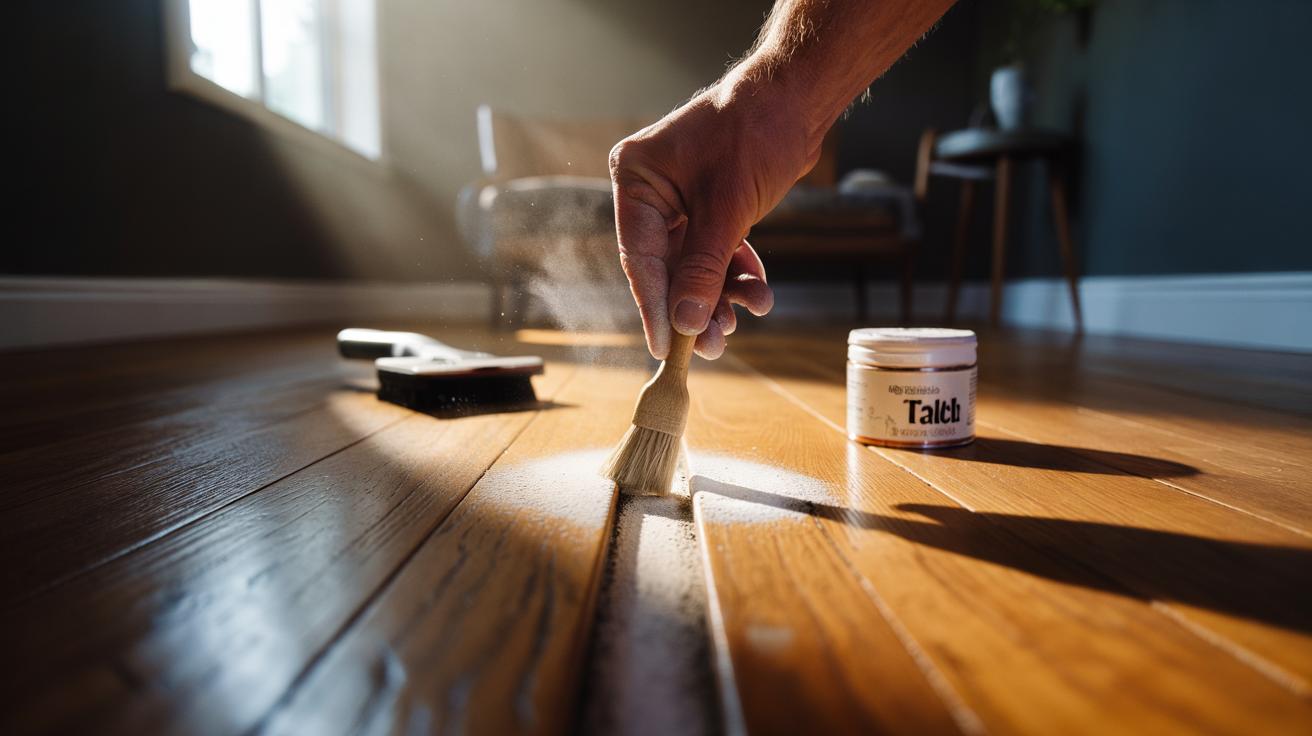
First, find the culprit. Walk slowly, heel to toe, and mark the squeak with painter’s tape. Vacuum the gaps to remove grit. Now, lightly sprinkle talcum powder along the board edges and the squeaky seam. Use a soft brush, an old card, or a dry cloth to work the powder into joints and around nail heads. Tap gently with the handle of a screwdriver to vibrate powder deeper. Walk over the area to settle it, then add a touch more if the noise lingers. Wipe away residue and buff the surface so the finish looks natural.
| Tool/Material | Purpose |
|---|---|
| Vacuum with crevice tool | Clears dust so talc reaches friction points |
| Talcum powder (asbestos‑free) | Dry lubricant and moisture adsorber |
| Soft brush or playing card | Works powder into tight gaps |
| Painters’ tape/chalk | Marks exact squeak zones |
Use cosmetic-grade, asbestos‑free talc and avoid inhaling dust—wear a light mask and keep pets away until you’ve cleaned up. If you’d prefer a pantry alternative, cornstarch or bicarbonate of soda can offer a similar short-term hush, though they’re less slick than talc. For deep tongue-and-groove joints, repeat the application once after 24 hours, as foot traffic will pull more powder into the seam. Finish by placing felt pads under furniture feet to reduce point loads that reawaken squeaks.
When Talc Works, When It Doesn’t
Talc shines on light-to-moderate squeaks where the problem is surface friction or seasonal movement. If your boards creak only when humidity spikes or when a single plank flexes near a fastener, talcum powder is ideal. It’s also a safe first step on older floors where you’d rather not drive fresh screws. If the board stops groaning as soon as you apply pressure, lubrication usually solves it. Expect results to last months; top up after deep cleans or a damp spell.
There are limits. If the floor moves visibly, if nails have missed joists, or the subfloor is loose, powder won’t fix the root cause. In those cases, secure the subfloor with trim-head screws from above, or screw from below through joists if accessible. Persistent squeaks over heated floors may indicate expansion gaps are missing. Consider a dehumidifier in rooms that swing from damp to dry. For concealed stairs or carpeted areas, lift the nosing or apply a graphite lubricant; talc can clump under carpet.
Safety matters. Choose asbestos‑free talc, apply lightly, and clean thoroughly to avoid a slippery surface. If you prefer a food-safe route, try cornstarch, knowing it may need more frequent reapplication. And remember the litmus test: If the floor moves substantially, powder is a bandage, not a cure. Reserve heavier fixes—shims, screws, construction adhesive—for those cases, after confirming joist locations and pipe runs.
Talcum powder is a quiet hero: quick to apply, gentle on finishes, and highly effective against squeaks born of friction and a little damp. It’s inexpensive, reversible, and tidy—perfect for a Saturday fix before guests arrive. If it solves the noise, you’ve saved time and avoided invasive work; if not, you’ve learned exactly where the structure needs attention. Ready to try a light dusting and listen to the difference—or will you investigate the joists first and go straight for a permanent mechanical fix?
Did you like it?4.5/5 (21)