In a nutshell
- 🧪 Why vinegar works: its acetic acid dissolves alkaline deposits and grease, so a 1:1 white vinegar–warm water mix with a lint-free microfiber lifts residue for a crisp, streak-free finish.
- ⏱️ Two-minute method: light mist, wipe edges first, use vertical strokes outside and horizontal inside, then a fast dry buff; swap to a fresh cloth if haze lingers and use a squeegee for large panes.
- 🪟 Smart variations: add one drop dish soap for hairspray on mirrors, let solution dwell on shower screens or use a 2:1 mix for scale, avoid vinegar on aftermarket tints, and spray the cloth for framed art.
- ⚠️ Safety and surfaces: never mix vinegar with bleach, avoid natural stone and coated screens, work out of direct sun, and wipe overspray from metals to prevent corrosion.
- 🧠 Troubleshooting tips: use distilled water in hard-water areas, wash microfibers without softener, skip paper towels, clean on cloudy days, and remember process consistency beats elbow grease for a streak-free shine.
Windows, mirrors, shower screens — glass promises clarity, until fingerprints, hard-water haze, and greasy smears ruin the view. Here’s the surprising fix hiding in your cupboard: plain white vinegar. In two minutes, it can cut through grime and vanish streaks without harsh chemicals or expensive sprays. The trick is using the right dilution, the right cloth, and the right motion. Speed matters because the solution must lift residue before it dries. With a quick spritz, a microfiber swipe, and a crisp buff, you’ll have panes that look professionally cleaned. Let’s break down the science, the method, and the smart tweaks.
Why Vinegar Works on Glass
At the heart of this method is acetic acid, the mild acid in white vinegar that dissolves alkaline deposits and reduces the surface tension that causes streaking. Grease, soap scum, and hard-water minerals bond to glass, but vinegar disrupts those bonds, loosening grime so it can be lifted in one pass. Streaks are usually residue; remove the residue, remove the streaks. Unlike many commercial cleaners, vinegar leaves no waxes or silicone polish behind, so the finish looks sharp rather than cloudy. It also evaporates quickly, useful when time is tight.
The key is dilution and contact time. Use distilled white vinegar for predictably clean results, especially in hard-water regions where tap water adds mineral spots. A simple 1:1 mix with warm water increases solvency and helps the solution spread evenly. Do not mix vinegar with bleach or products containing chlorine — that produces dangerous fumes. Pair the solution with a lint-free microfiber cloth that can trap loosened particles rather than smear them around. This combo produces the crisp, streak-free finish you want, fast.
Two-Minute Method: Step-by-Step
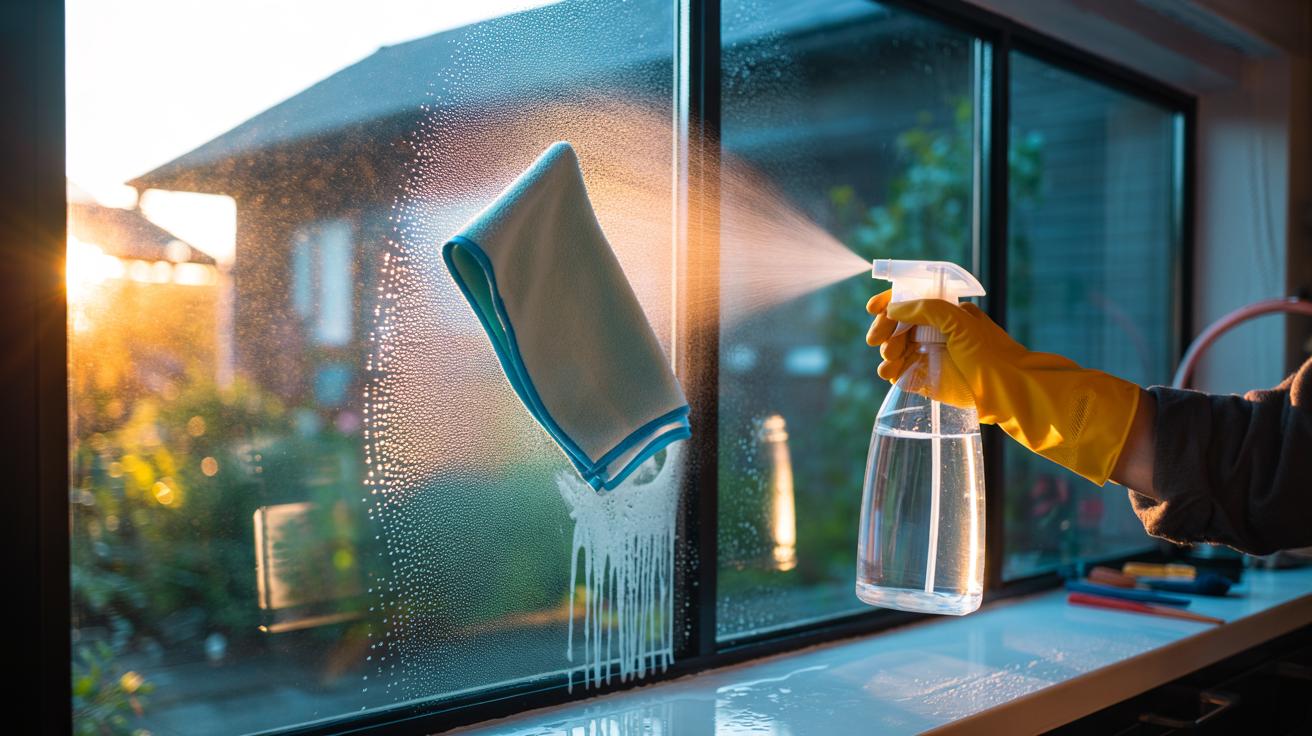
Ready the mix: combine 1 part white vinegar with 1 part warm water in a clean spray bottle. For heavy grease, add a single drop of plain dish soap, shake once, and you’re set. Work out of direct sunlight to prevent flash-drying. Spray the glass lightly; you want a mist, not a drip. Start with edges and handles where fingerprints collect. Wipe using a folded microfiber cloth in tight, consistent strokes — vertical on the outside, horizontal on the inside — so any streak direction reveals which side needs a second pass. Flip the cloth to a dry side and buff fast.
| Step | Time | Key Tip |
|---|---|---|
| Mix 1:1 vinegar and warm water | 20–30 sec | Distilled water reduces spotting |
| Light mist and wipe | 60–70 sec | Use microfiber, not paper towels |
| Quick final buff | 20–30 sec | Dry, clean section of cloth |
Target corners with a cotton swab or the cloth’s folded edge. For mirrors, attack the center first to prevent drip trails. Glass doors? A small squeegee speeds the final pass; wipe the blade between strokes. The entire process, from spray to shine, takes about two minutes per pane. If haze persists, your cloth may be saturated — swap for a fresh one for a flawless finish.
Smart Variations for Different Glass
Bathroom mirrors often carry aerosol hairspray and toothpaste flecks. Use the 1:1 mix, plus that single drop of dish soap for the first pass; then switch back to pure vinegar-and-water for maintenance. Shower screens accumulate mineral deposits. Let the solution dwell for 45–60 seconds before wiping, then squeegee. For stubborn scale, pat on a slightly stronger 2:1 vinegar-to-water mix and rinse afterward. Test any stronger mix on a corner first.
Interior windows respond best to a light mist and microfiber strokes. Car glass needs care: avoid vinegar on aftermarket tinted film and stick to the 1:1 blend on bare glass, using a dedicated automotive microfiber to prevent smearing. Skip electronics and coated screens — vinegar can degrade oleophobic layers. Never use vinegar on natural stone surrounds or on aluminum with compromised anodizing; wipe overspray immediately. For framed art under glass, spray the cloth, not the surface, to keep moisture away from the matting. With these tweaks, the same humble bottle handles bathrooms, kitchens, and conservatories with ease.
Troubleshooting and Pro Tips
Seeing faint lines? That’s usually the cloth. Wash microfibers separately, no fabric softener, and low heat. Paper towels shed lint and can leave a pulpy haze; avoid them. If your area has very hard water, mix vinegar with distilled water to prevent new mineral spots. Clean on a cloudy day or in shaded rooms so the solution doesn’t evaporate before it lifts residue. Work top to bottom to stop streaks from re-forming as drips migrate.
For large panes, pre-wet with a fine mist, then use a squeegee in overlapping strokes, wiping the blade each pass. Want to soften the scent? Add a strip of lemon peel to the bottle for a light, natural note — but skip oils on automotive glass. Keep a labeled, small spray bottle and a folded microfiber in a drawer; quick daily wipes mean deep cleans become rare. Finally, store the mix capped and away from metals that can corrode. Streak-free glass is about process consistency, not elbow grease. Do that, and two minutes is all you’ll need.
In a world of pricey cleaners and complicated routines, vinegar’s appeal is simple: it works, it’s cheap, and it’s fast. Used with the right cloth and a few practical tweaks, it removes fingerprints, limescale haze, and greasy films without leaving a chemical sheen. Clarity you can trust, on demand. The next time sunlight exposes every smudge, you’ll have a plan that restores the view in minutes, not an hour. What glass surface in your home will you test first — and which pro tip will you try to guarantee that streak-free shine?
Did you like it?4.4/5 (28)