In a nutshell
- 🍋 Harness citric acid and warm steam to loosen baked-on grease fast, softening grime so it wipes away with minimal effort.
- ⏱️ Follow the 10-minute clean: bowl of lemon water on the middle shelf at 180°C, then warm wipe-down with a microfibre cloth.
- ⚠️ Prioritise safety: never mix with bleach or ammonia, use gloves, rinse thoroughly, and keep contact brief on bare aluminium or delicate finishes.
- 🧰 Quick kit and costs: lemon, oven-safe bowl, microfibre cloth, soft brush; budget about 50p–£1 per clean and repeat weekly to prevent build-up.
- 🌍 Eco and beyond: the method uses biodegradable acids, cuts aerosols and waste, and doubles for microwaves, mugs, boards, and stainless steel touch-ups.
There’s a simple, citrus-charged way to cut through baked-on splatters and sticky spills without choking fumes or endless scrubbing. Armed with a lemon, a bowl of water, and a cloth, you can harness nature’s chemistry to soften grime and lift grease in minutes. The secret is citric acid. When heated, it teams up with steam to break bonds that hold the mess in place, leaving your oven fresher and easier to wipe. A 10-minute turnaround is realistic for light to moderate build-up. Heavier deposits? You’ll still make serious headway fast, then finish with a second pass. It’s simple, low-cost, and it smells like a clean kitchen should.
Why Lemon Works on Oven Grime
At the heart of lemon’s cleaning power is citric acid, a mild organic acid that dissolves alkaline residues, loosens polymerised fats, and chelates mineral specks left by water and food. When you warm lemon-infused water, the oven fills with moist heat. That vapour softens the crust on glass and enamel, so a cloth can sweep it away. It’s gentle on coatings and kinder to lungs than many aerosol degreasers. The lemon’s essential oils add slip, helping to lift greasy films from racks and sidewalls. It’s chemistry you can smell. Clean, bright, unmistakably citrus.
There’s also a practical advantage. Steam gets into corners that brushes miss. It creeps under burnt sugar, loosens roasted-on gravy, then carries the lemon’s acid into micro-pits where grime likes to hide. You’re not grinding dirt across the surface; you’re melting its grip. And because the solution is food-safe when rinsed, it’s a reassuring choice for family ovens, student flats, and rented homes where harsh products risk damage or deposit streaks you can’t explain to a landlord.
Ten-Minute Method: Step-by-Step
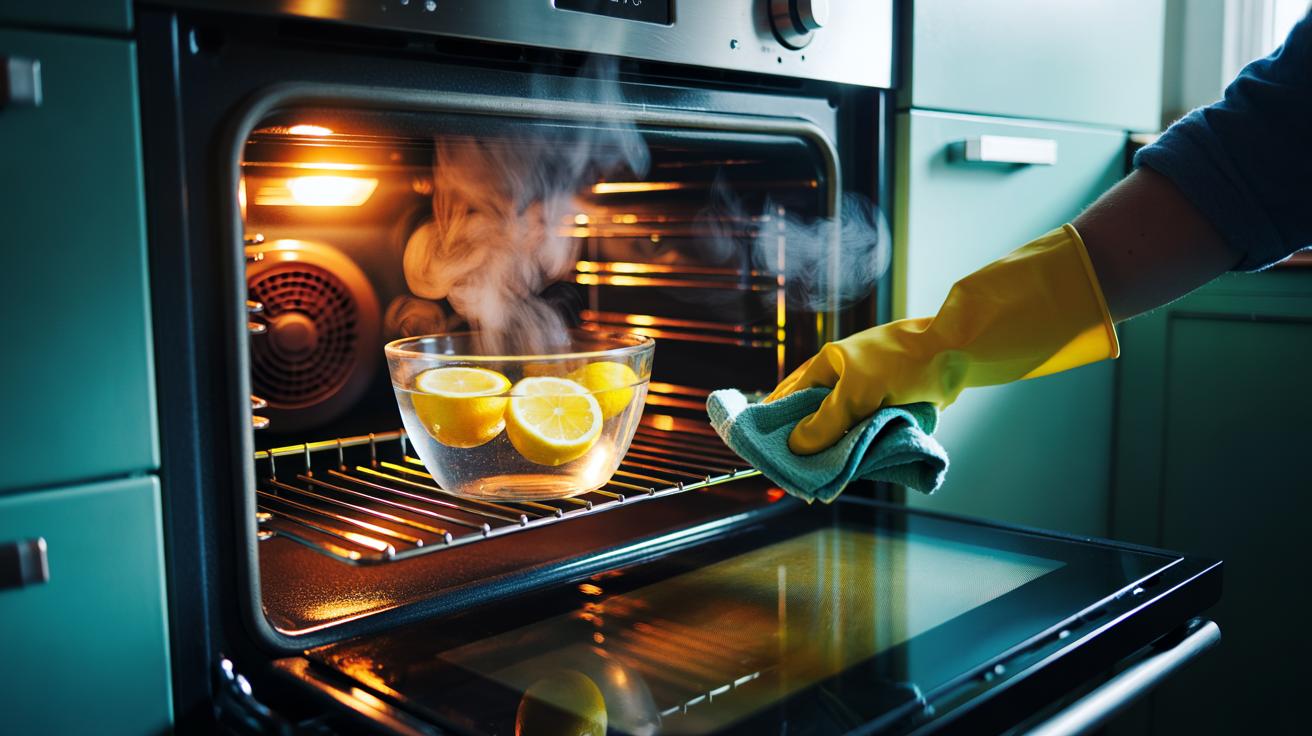
Start with a cool oven. Remove loose crumbs with a dry cloth or brush. Halve a fresh lemon and squeeze it into an oven-safe bowl containing about 300 ml of hot water; drop the squeezed halves in, too, for extra oils. Place the bowl on the middle shelf. Preheat to 180°C and let the lemon water heat for 10 minutes. Shut the door and let steam do the heavy lifting. That vapour softens residues while the acid begins to cut grease. No harsh smell. No sting in the air.
Switch off the oven and crack the door for 30 seconds to release excess heat. Wearing gloves, remove the bowl. While the cavity is still warm—not hot—dip a microfibre cloth into the hot lemon water and wipe from top to bottom, finishing with the glass. Stubborn patches? Press the damp cloth on the spot for 20 seconds, then wipe. For seals and crevices, a soft brush dipped in the solution works wonders. Rinse with clean water, then buff dry. If heavy carbon remains, repeat the steam cycle, or make a quick paste of lemon juice and a pinch of bicarbonate for targeted dabs—avoid prolonged contact on bare aluminium.
Safety, Materials, and What to Avoid
Never mix acids with bleach or ammonia. If your oven has recently seen chlorine-based cleaners, skip this method until the odour is completely gone and you’ve aired the cavity. Lemon is mild, but it is still acidic: keep it brief on bare aluminium, uncoated steel, or natural stone trims. Enamel liners, tempered glass, and chrome racks tolerate brief contact well. Protect skin with light gloves; heat and acid can irritate. Always wipe and rinse surfaces to remove any residue before the next bake. That prevents flavours transferring to tonight’s roast.
Good tools matter. A microfibre cloth grabs loosened soils without scratching, and a silicone spatula can gently lift softened spots from glass. Avoid abrasive pads on the door; they haze the view. For catalytic liners, follow the manufacturer’s guidance—many tolerate a quick citrus steam, but avoid scrubbing. Test an inconspicuous corner if in doubt. Keep lemons off seasoned cast iron (like griddle inserts): acid strips seasoning. Finally, ventilate lightly; the scent is pleasant, but airflow helps surfaces dry streak-free and prevents condensation pooling in corners.
Quick Reference: Time, Tools, Costs
Here’s a compact guide to plan your 10-minute lemon clean. It helps you gauge what you’ll need, what you’ll spend, and how to adapt for different mess levels. Preparation saves time; steam does the rest.
| Item | Details |
|---|---|
| Prep Time | 2 minutes (clear crumbs, halved lemon, bowl of water) |
| Heat Cycle | 10 minutes at 180°C for steam softening |
| Wipe-Down | 5–8 minutes with microfibre cloth |
| Tools | Oven-safe bowl, lemon, cloth, light gloves, soft brush |
| Cost | About 50p–£1 per clean (one lemon) |
| Best For | Light to moderate grease, glass haze, fresh splatters |
For baked-on carbon, add a second steam cycle or spot-treat with a swift dab of lemon-and-bicarb paste, then rinse thoroughly. Keep the process short and gentle to protect finishes. Consistency is key: a weekly lemon steam prevents build-up, meaning each clean stays quick.
Beyond the Oven: Extra Uses and Eco Benefits
The lemon trick extends across the kitchen. Warm lemon steam clears microwave odours in five minutes. A squeeze on a damp cloth lifts tea stains from mugs, while the rind freshens chopping boards—finish with a rinse. On hob rings and pans, a quick rub tackles rainbow heat marks on stainless steel, though avoid soaking reactive metals. Even fridge shelves benefit from a dilute lemon wipe, leaving a crisp scent without synthetic fragrances that linger on food. It’s versatility that earns a permanent spot in the fruit bowl.
There’s a sustainability dividend. By relying on biodegradable acids and skipping solvent-heavy sprays, you cut packaging waste and indoor pollution. Fewer aerosols, fewer single-use wipes, fewer questionable residues on a surface that cooks your supper. Lemons are affordable, available year-round, and they multitask in drinks and recipes, reducing waste. This is the rare hack that feels like a treat: clean lines on the glass door, a warmer kitchen smell, and a chore that actually finishes on time. Small change, big difference.
A lemon, a bowl, ten minutes: that’s the reset button your oven has been waiting for. The chemistry is gentle yet effective, the method simple enough for a weeknight, and the results surprisingly glossy. Next time splatters bake on, you’ll know the drill—steam, wipe, buff, done. Ready to trade harsh fumes for citrus clarity and see how quickly your weekly clean can shrink—what part of your kitchen will you refresh with lemon power next?
Did you like it?4.3/5 (23)