In a nutshell
- 🧪 Acetic acid in distilled white vinegar dissolves limescale and light grease, evaporating cleanly for a streak-free shine in about one minute.
- 🧰 Use a 1:1 mix of distilled white vinegar and warm water with a folded microfibre cloth; add a squeegee for large panes and adjust dilutions (1:3 for light soil, 2:1/6% for hard-water spots).
- ⏱️ The one-minute method: mist lightly, let dwell 15–20 seconds, wipe top-to-bottom in overlapping strokes, squeegee in an S-pattern, then dry-buff edges; reduce liquid or change to a clean cloth if streaks appear.
- 🛡️ Surface and safety: keep vinegar off natural stone, avoid electronic screens and anti-glare coatings, never mix with bleach, and spot-test films/coatings first.
- 🔧 Troubleshooting for UK homes: wash microfibres hot (no softener), work in shade to prevent flash-drying, pre-rinse exterior grime, and note that misty double glazing signals a failed seal requiring a glazier.
There’s a reason professional window cleaners quietly champion vinegar. It’s cheap, safe, and fast. When daylight hits the glass just so, smears leap out like headlines. You need a fix that doesn’t leave new marks. Enter acetic acid, the active star in distilled white vinegar, which dissolves mineral films and evaporates cleanly. Used correctly, it gives a streak-free shine in about one minute per pane. No perfume. No dyes. Just clarity. This isn’t a fad; it’s a reliable newsroom tip for homes from Aberdeen to Penzance, cutting through hard water haze and winter grime without fuss. Let’s break down the why, the how, and the few caveats that protect your frames and finishes.
Why Vinegar Cuts Through Grime Faster than You Think
Glass grime is rarely “dirt” in the garden sense. It’s a cocktail: dried detergent traces, limescale from hard water, a whisper of kitchen grease, and airborne particulates. Distilled white vinegar’s acetic acid (typically 5%) targets the alkaline portion of that mix. It loosens mineral bonds, softens water spots, and helps thin light oils so a microfibre cloth can lift them away. Crucially, vinegar dries without waxes or soaps. No residue means no streaks. That’s the entire trick, and it’s why the result looks sharper than after many fragranced sprays.
There’s speed in the physics, too. Vinegar’s low surface tension lets it sheet across glass, wetting evenly in seconds. While it dwells, it chelates mineral ions, undoing that chalky bloom you see at the edges. Then your cloth or squeegee does the mechanical work: break the film, pull it clean, leave nothing behind. It’s chemistry plus technique, not elbow grease. Use only clear distilled white vinegar—no malt, no balsamic—because coloured vinegars stain and smell. For sensitive noses, dilute, ventilate, and the odour dissipates as the glass dries.
The One-Minute Method: Step-by-Step
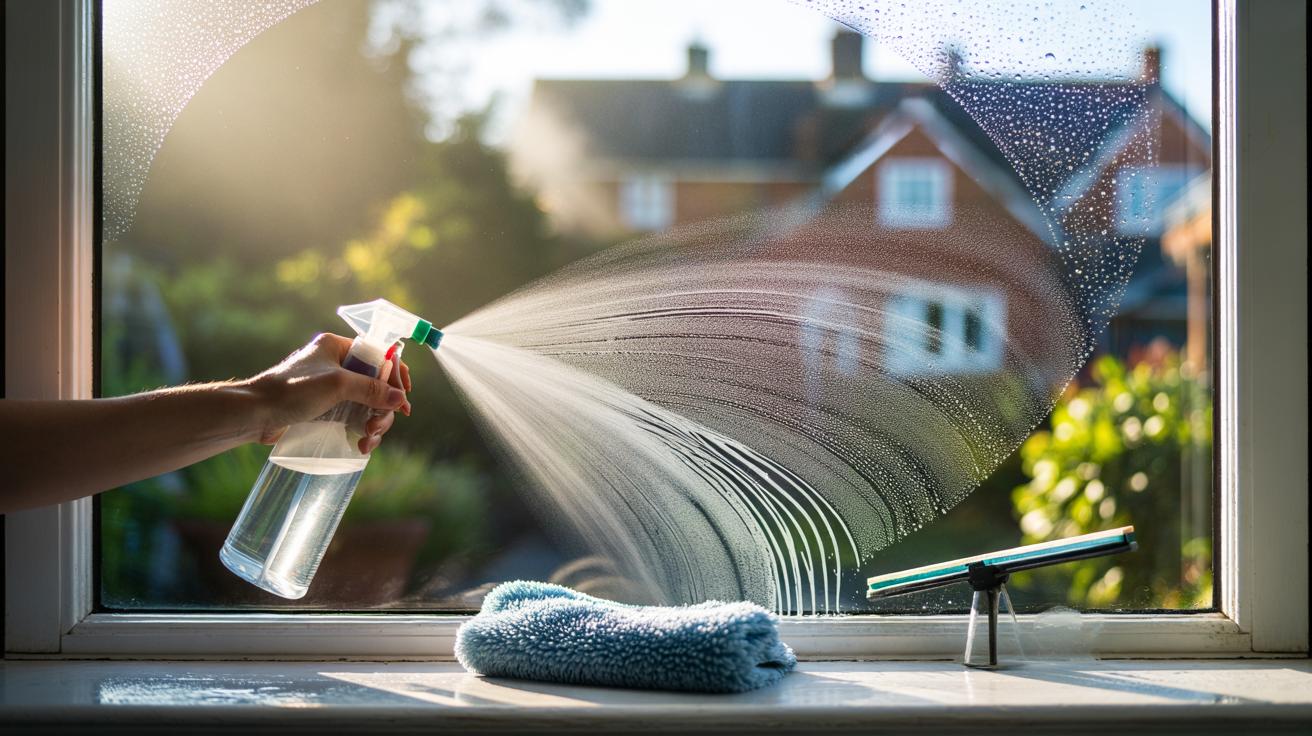
Tools are simple: a trigger bottle with a 1:1 mix of distilled white vinegar and warm water, one plush microfibre cloth (folded into quarters), and a small squeegee for larger panes. Optional: cotton buds for corners, a dry polishing cloth for the final pass. Keep cloths clean and fabric-softener-free to avoid film.
Timing matters. Lightly mist the glass—don’t drown it. Let it dwell for 15–20 seconds while the acetic acid loosens mineral spots. Wipe in swift overlapping strokes, top to bottom, switching to a fresh side of the microfibre the moment resistance builds. For big panes, squeegee in an S-pattern, wiping the blade edge on a towel after each pass. Edge-detail with a dry cloth to catch any runs at the sill. That’s the minute: 10 seconds to spray, 20 to dwell, 20 to wipe, a few seconds to finish. If you see streaks, you used too much liquid or a clogged cloth. Flip the cloth, or finish with a dry buff.
Ratios, Surfaces, and Safety You Should Know
Not every window faces the same dirt. Adjust the vinegar-to-water ratio to suit the job, and consider the surface around it. Glass loves vinegar; natural stone does not. Avoid overspray on marble, limestone, or concrete sills, and don’t use vinegar on electronic screens or anti-glare coatings. Gloves help if you have sensitive skin, and never mix vinegar with bleach.
| Task | Vinegar Type | Dilution | Tool | Time |
|---|---|---|---|---|
| Daily dust and fingerprints | Distilled white (5%) | 1:3 (vinegar:water) | Plush microfibre | 45–60 sec |
| General window refresh | Distilled white (5%) | 1:1 | Microfibre or squeegee | ~1 minute |
| Hard water spotting | Cleaning vinegar (6%) | 2:1 or neat on spots | Cloth, targeted dab | 1–2 minutes |
| Greasy kitchen film | Distilled white (5%) | 1:1 (+ drop washing-up liquid) | Microfibre | ~90 sec |
On uPVC frames, a quick wipe is fine; avoid lingering wetness on old rubber gaskets. For mirrors, spray onto the cloth, not the glass, to protect the backing. Test tinted films and specialty coatings in an inconspicuous corner first. If in doubt, start weaker and work stronger only where needed.
Troubleshooting and Pro Tips for UK Homes
If streaks persist, the culprit is usually a dirty or over-saturated cloth. Wash microfibres hot, no fabric softener, and air-dry. Try less liquid and quicker passes. On tall panes, use a squeegee with a sharp, clean blade; dull rubber leaves chatter marks. Work from shade to sun—direct heat flash-dries cleaner and bakes in streaks. Exterior grime after storms? Pre-rinse with plain water, then apply vinegar mix. For bird strikes or tree sap, lay a vinegar-soaked pad over the spot for one to two minutes before wiping.
Misty glass between double-glazed panes signals a failed seal, not dirt. No household solution fixes that; you’ll need a glazier. Condensation on the inside? Improve ventilation, run an extractor, or try a dehumidifier near problem windows. Winter tip: use warm (not hot) solution and smaller working sections to prevent icing and to avoid thermal stress. Keep sprays away from stone hearths and sills, and protect painted timber with a quick wipe-down immediately after cleaning. Small bottle, big clarity; the secret is technique, not force.
Vinegar won’t win beauty contests, but it wins on glass. It strips away the culprits of haze, leaves nothing behind, and respects your budget. With a folded microfibre, a sharp squeegee, and a smart dilution, you can hit a pane, wipe with intent, and watch the view snap into focus. One minute is realistic for light soil; tougher jobs still benefit from the same method, just a touch more dwell. Ready to swap perfumed sprays for simple clarity—and which window will you time first to see how fast you can go?
Did you like it?4.5/5 (28)