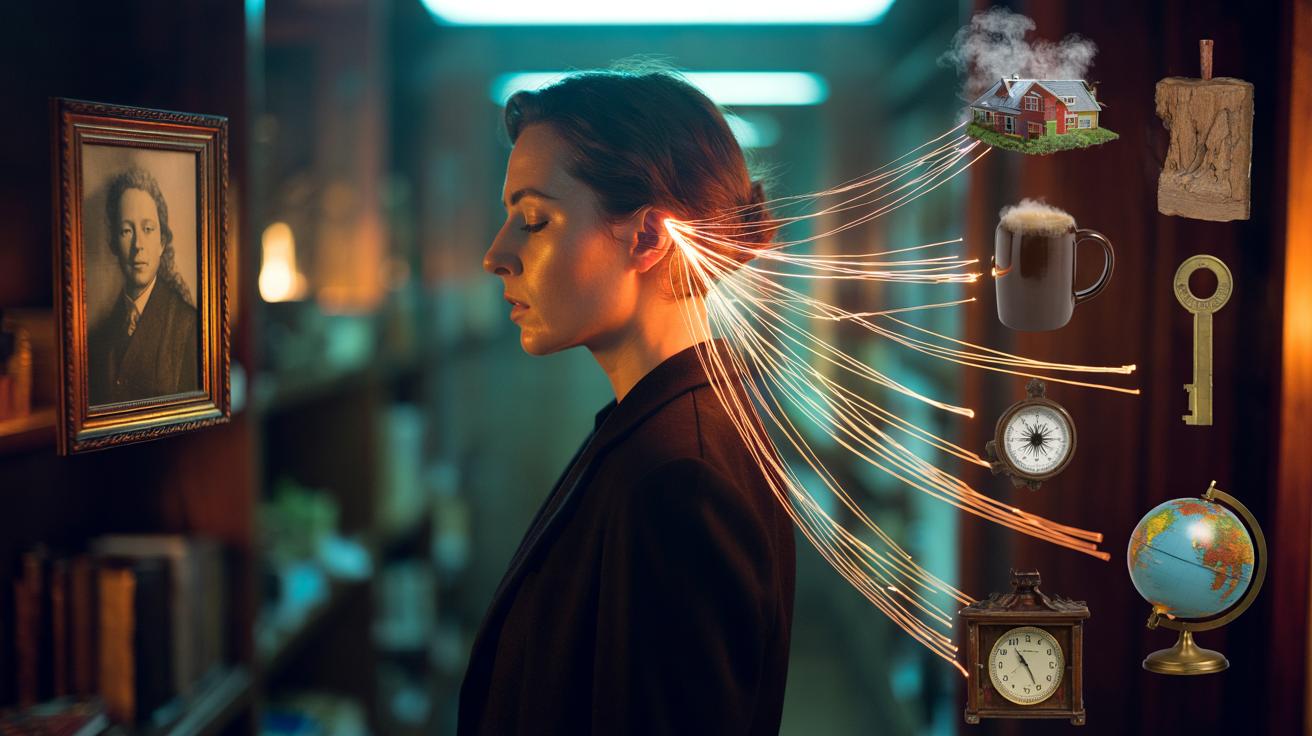
In a nutshell
- 🧠 Anchoring boosts memory by linking new facts to vivid cues, making recall cue-dependent and often achievable in seconds.
- 🔬 Backed by science: encoding specificity and hippocampal associative networks mean strong retrieval cues (faces, places, sounds) cut search time dramatically.
- 📍 Practical anchors include people, places via the Method of Loci, mini stories, and sensory tags; one bold, emotional image outperforms many bland notes.
- ⏱️ Use a 60-second routine: extract the essence, pick the right anchor, craft an exaggerated image, say it aloud, then reinforce with spaced repetition and rapid self-tests.
- ⚠️ Avoid overlap and clutter to prevent interference; spread anchors along routes, keep them distinct, and log recall time—many see doubled accuracy and faster retrieval within a week.
Across Britain’s classrooms, boardrooms, and kitchen tables, we’re all battling the same foe: forgetfulness. The trick to beating it isn’t more time, it’s better hooks. Anchoring—linking new facts to vivid people, places, and sensations—creates fast, reliable pathways back to information. You’re not forcing your brain to work harder; you’re giving it handles. Think of it as intellectual Velcro. Attach a detail to a striking anchor and recall can happen in seconds. From exam crammers to news editors on deadline, the technique scales. Used right, it doesn’t just improve memory; it multiplies it, turning loose facts into a connected, easy-to-navigate map.
The Science Behind Anchoring Links
The brain remembers through associations. Neurons fire in patterns, and those patterns become pathways. Anchoring deliberately strengthens these routes. The result is not magical, just mechanical: more pathways, faster access. Cognitive scientists call this encoding specificity. Information is stored with the context that surrounds it, so recreating even part of that context becomes a powerful key. Memory is cue-dependent. When we bind a new fact to a distinctive cue, we add extra entrances to the same mental room.
Think of a retrieval cue as a doorbell. A person’s face, the smell of coffee, the sound of rain on a window—any of these can ring the bell and bring the memory to the door. The hippocampus tags these cues and knits them into a wider associative network. That’s why a tune can unlock a name you “almost had.” Anchoring simply makes that process intentional.
There’s speed in structure. Chunk a sequence (dates, steps, clauses) and lodge the chunk in a vivid image or a known place. Linking multiplies access routes while reducing search time. Under pressure—presentations, interviews, timed essays—those planned links pull answers out quickly, the way a postcode guides a sorting office. Less rummaging, more recall.
Practical Anchors: People, Places, and Stories
Start with what sticks. People make strong anchors because faces and personalities are naturally memorable. Tag a legal principle to a celebrity whose behaviour embodies it. Places work too—the classic Method of Loci—by dropping facts along a route you know well: front door, hallway, kitchen, desk. Stories are the Swiss Army knife: they combine scenes, characters, and cause-and-effect, giving multiple hooks for one price. Sensory anchors—smell of mint gum, a particular ringtone—can be surprisingly potent when used sparingly. One vivid anchor beats ten bland notes. Aim for bold, unusual, emotional.
Good anchors are distinctive, concrete, and personal. A generic office is weak; your cluttered local café is strong. Add emotion and motion—make the image move, give it stakes. Keep anchors non-overlapping to avoid interference; the more similar they are, the more they blur. Build a tiny ritual: read the fact, decide an anchor category (person/place/story/sensory), create the link, then paraphrase aloud. Spaced repetition cements the bond over days, not hours. Link facts to what you already know and test the link quickly; if it doesn’t fire within seconds, redesign it.
| Anchor Type | Simple Example | Best For | Setup Time |
|---|---|---|---|
| Place (Loci) | Facts on rooms along a hallway | Ordered lists, procedures | 30–60 seconds |
| Person | Tax rule linked to a thrifty celebrity | Definitions, principles | 15–30 seconds |
| Story | Cause–effect chain as a mini plot | Processes, timelines | 45–90 seconds |
| Sensory | Mint scent for “green energy” notes | Category tags, themes | 10–20 seconds |
| Pattern/Number | 1066 as “10–66 football score” | Dates, figures | 10–20 seconds |
A 60-Second Anchoring Routine for Exams and Meetings
Set a timer. Read the target fact once, slowly. Identify the essence in under ten words. Now choose your anchor. If it’s sequential, pick a place. If it’s abstract, choose a person or story. Build an image that exaggerates the idea until it’s absurd. The absurdity helps it stick. Speak the link out loud: “Clause 14 = librarian shushing at shelf 14.” Seconds matter under pressure, so resist perfectionism; a rough, vivid link beats a precise, dull one.
Close your eyes and recall the anchor first, then let it pull up the fact. If it takes longer than three seconds, sharpen the image: brighter colour, bigger motion, stronger emotion. Write a three-word tag in the margin—“Librarian-14-Shelf”—and move on. After ten minutes, test recall again without notes. Later the same day, run a one-minute spaced retrieval: anchor, fact, paraphrase, done. The micro-rehearsal is the glue.
Watch for pitfalls. Overcrowding one room with twenty facts causes interference; spread them along a route. Similar anchors collide; make each distinct. Don’t let anchors drift into fantasy that obscures meaning. The aim is a bridge, not a maze. Track results in a revision log—fact, anchor type, recall time. What gets measured improves. Many readers report doubling recall accuracy and slashing retrieval time once they anchor consistently for a week.
Linkage is leverage. By turning loose data into anchored, high-contrast cues, you build a brain-friendly filing system that is fast to use and oddly satisfying. Anchoring gives you multiple doors to every important room, which is why it wins under stress. It’s efficient, portable, and customisable to your own quirks. The right cue at the right moment changes everything. Whether you’re swotting for finals or pitching to a client, the method scales with your ambition. Which anchors will you try first, and how will you measure the effect on your next high-stakes task?
Did you like it?4.5/5 (30)